

idx int64 0 24 | global_id stringlengths 44 46 | url stringlengths 33 133 | date timestamp[s]date 2015-03-02 01:22:32 2024-03-01 05:01:37 | warc_date timestamp[s]date 2015-03-02 01:22:32 2024-03-01 05:01:37 | dump stringlengths 15 15 | file_path stringlengths 125 142 | mineru_text stringlengths 80 10.2k | original_text stringlengths 540 10.2k | status stringclasses 1
value |
|---|---|---|---|---|---|---|---|---|---|
0 | webtext-fineweb__CC-MAIN-2023-06__0__178259526 | https://executivegov.com/2021/01/boeing-wins-2b-usaf-contract-to-deliver-kc-46a-tankers/ | 2023-02-06T19:31:29 | 2023-02-06T19:31:29 | CC-MAIN-2023-06 | s3://commoncrawl/crawl-data/CC-MAIN-2023-06/segments/1674764500357.3/warc/CC-MAIN-20230206181343-20230206211343-00101.warc.gz | # Boeing Wins \$2B USAF Contract to Deliver KC-46A Tankers

KC-46A Tankers
Boeing has been awarded a \$2.1 billion contract to deliver 15 KC-46A tankers to the U.S. Air Force, the company reported on Thursday. With the award, the U.S. Air Force will expand its fleet of aircraft, which will help enable the integrated digital battlespace.
“The KC-46’s adaptability is going to be a game-changer for the U.S. Air Force,” said Jamie Burgess, Boeing KC-46 tanker vice president and program manager. “We know our defense customers will need to transform how they fight and win in the modern era. That’s why Boeing is focused on making sure the KC-46 grows and changes with them.”
Boeing’s KC-46 will connect air forces to data needed to maintain the decision advantage and increase success rate on the battlefield. The KC-46 has been designed for state-of-the-art air refueling, cargo and medical transport. Boeing is now on contract for 94 KC-46A tankers.
Boeing delivered the first KC-46A to the U.S. Air Force in Jan. 2019. Since then, the company has delivered 42 tankers to bases across the nation. Boeing’s next-generation KC-46 will feature new capabilities and operational flexibility, which the company will provide to the U.S. Air Force and international customers.
“Our KC-46 fleet is growing, and we’re ready to extend the reach of next-generation air refueling to more of our Airmen,” said Col. Jason Lindsey, U.S. Air Force KC-46 System program manager.

Leanne Caret, president and CEO of Boeing’s Defense, Space and Security
In April 2020, Boeing and the U.S. Air Force have agreed to incorporate the final design for the remote vision system into KC-46A Pegasus contract requirements. The agreement calls for the implementation of the RVS 2.0 technology with a laser ranger designed to measure distance of the refueling aircraft, larger operator screens and 4K-color cameras
Leanne Caret, president and CEO of Boeing’s defense, space and security segment and a 2020 Wash100 Award recipient, said the advancements are intended to prepare the tanker for future functions such as autonomous refueling and to support other programs as well.
| Boeing has been awarded a $2.1 billion contract to deliver 15 KC-46A tankers to the U.S. Air Force, the company reported on Thursday. With the award, the U.S. Air Force will expand its fleet of aircraft, which will help enable the integrated digital battlespace.
“The KC-46’s adaptability is going to be a game-changer for the U.S. Air Force,” said Jamie Burgess, Boeing KC-46 tanker vice president and program manager. “We know our defense customers will need to transform how they fight and win in the modern era. That’s why Boeing is focused on making sure the KC-46 grows and changes with them.”
Boeing’s KC-46 will connect air forces to data needed to maintain the decision advantage and increase success rate on the battlefield. The KC-46 has been designed for state-of-the-art air refueling, cargo and medical transport. Boeing is now on contract for 94 KC-46A tankers.
Boeing delivered the first KC-46A to the U.S. Air Force in Jan. 2019. Since then, the company has delivered 42 tankers to bases across the nation. Boeing’s next-generation KC-46 will feature new capabilities and operational flexibility, which the company will provide to the U.S. Air Force and international customers.
“Our KC-46 fleet is growing, and we’re ready to extend the reach of next-generation air refueling to more of our Airmen,” said Col. Jason Lindsey, U.S. Air Force KC-46 System program manager.
In April 2020, Boeing and the U.S. Air Force have agreed to incorporate the final design for the remote vision system into KC-46A Pegasus contract requirements. The agreement calls for the implementation of the RVS 2.0 technology with a laser ranger designed to measure distance of the refueling aircraft, larger operator screens and 4K-color cameras
Leanne Caret, president and CEO of Boeing’s defense, space and security segment and a 2020 Wash100 Award recipient, said the advancements are intended to prepare the tanker for future functions such as autonomous refueling and to support other programs as well. | ok |
1 | webtext-fineweb__CC-MAIN-2018-51__0__34147929 | https://www.militaryhire.com/jobs-for-veterans/job/1927578/Helpdesk-Specialist-Public-Address-System/state/Maryland/city/Andrews-Afb/ | 2018-12-14T03:07:24 | 2018-12-14T03:07:24 | CC-MAIN-2018-51 | s3://commoncrawl/crawl-data/CC-MAIN-2018-51/segments/1544376825349.51/warc/CC-MAIN-20181214022947-20181214044447-00522.warc.gz | # Helpdesk Specialist Public Address System - Military veterans preferred
Date Posted: 2018-11-29
Company: The CENTECH GROUP (www.centechgroup.com)
Job Category: Defense Contracting
Salary Range:/yr
Types of Work:
full-time employee contract
Location:
City: Andrews Afb
State: Maryland
Country: United States
THE CENTECH GROUP, Inc. (CENTECH®) is seeking a Help Desk Specialist to contribute to the Air Force National Capital Region (AFNCR) Network Infrastructure Support Systems Engineering and Technical Assistance (SETA) Program, Andrews AFB, MD, to assist users with issues associated with the public address system, and events requiring the use thereof.
QUALIFICATIONS:
Qualifications are as follows:
Candidate must meet the requirements presented above
Candidate must have one (1) years experience
Candidate must have a Secret Security Clearance
Candidate must have a Security+ certification
RESPONSIBILITIES:
The duties and responsibilities of our Help Desk Specialist will be to provide assistance to users for the public address system, and events requiring the use thereof.
Required Skills:
Must have a broad, deep Customer Service orientation and professional demeanor
Must possess above average verbal and written communication skills
Must possess expertise in 1+ years of experience managing audio visual systems and familiarization with Anchor portable systems and Yamaha MG166C soundboards
Must have schedule flexibility to work varying hours
Desired skills:
Demonstrated experience interfacing with the Air Force is highly desired
| The CENTECH GROUP (www.centechgroup.com)
full-time employee contract
THE CENTECH GROUP, Inc. (CENTECH®) is seeking a Help Desk Specialist to contribute to the Air Force National Capital Region (AFNCR) Network Infrastructure Support Systems Engineering and Technical Assistance (SETA) Program, Andrews AFB, MD, to assist users with issues associated with the public address system, and events requiring the use thereof.
Qualifications are as follows:
Candidate must meet the requirements presented above
Candidate must have one (1) years experience
Candidate must have a Secret Security Clearance
Candidate must have a Security+ certification
The duties and responsibilities of our Help Desk Specialist will be to provide assistance to users for the public address system, and events requiring the use thereof.
Must have a broad, deep Customer Service orientation and professional demeanor
Must possess above average verbal and written communication skills
Must possess expertise in 1+ years of experience managing audio visual systems and familiarization with Anchor portable systems and Yamaha MG166C soundboards
Must have schedule flexibility to work varying hours
Demonstrated experience interfacing with the Air Force is highly desired | ok |
2 | webtext-fineweb__CC-MAIN-2020-10__0__105549784 | https://www.skf.com/cn/en/industry-solutions/wind-energy/requirements/design-for-lighter-nacelles/skf-nautilus.html | 2020-02-28T21:53:16 | 2020-02-28T21:53:16 | CC-MAIN-2020-10 | s3://commoncrawl/crawl-data/CC-MAIN-2020-10/segments/1581875147647.2/warc/CC-MAIN-20200228200903-20200228230903-00424.warc.gz | # SKF Nautilus
## Proven reliability and performance

The original SKF Nautilus double row tapered roller bearing is one unit that does the work of two, eliminating the need for a main shaft by connecting directly to the gearbox or generator and to the hub. No main shaft means substantial reductions in nacelle dimension and weight. The original SKF Nautilus also operates with much less friction than a main shaft supported by two bearings.
## Now with more design options than ever
The next generation of SKF Nautilus bearing solutions incorporates knowledge gained from many SKF Nautilus-equipped designs developed with turbine manufacturers and design consultants. The result is an expanded range of SKF Nautilus solutions that gives designers many new turbine design options, including those with gearboxes or direct drives, or outer or inner ring rotation.
## Integrated seal and pre-greased solution
SKF Nautilus bearings with integrated sealing carriers help reduce weight and associated costs, plus the risk of bearing contamination during turbine mounting. They also make it easy to replace seals on top of the turbine, without dismounting the carrier.
## Bolted inner ring
Building on the standard bolted outer ring of the original, SKF Nautilus bearings are now available with a bolted inner ring. The bearing is simply bolted to the rotor hub and to the mainframe, enabling significantly higher operational reliability and safety while eliminating the need for time-consuming mounting of all single components on-site.
## Impact business
- Impact business for Global Goals
Operational benefits alongside environmental and social impact. Read more on SKF's approach to create positive impact on the Global Goals - together with you.
| Proven reliability and performance
The original SKF Nautilus double row tapered roller bearing is one unit that does the work of two, eliminating the need for a main shaft by connecting directly to the gearbox or generator and to the hub. No main shaft means substantial reductions in nacelle dimension and weight. The original SKF Nautilus also operates with much less friction than a main shaft supported by two bearings.
Now with more design options than ever
The next generation of SKF Nautilus bearing solutions incorporates knowledge gained from many SKF Nautilus-equipped designs developed with turbine manufacturers and design consultants. The result is an expanded range of SKF Nautilus solutions that gives designers many new turbine design options, including those with gearboxes or direct drives, or outer or inner ring rotation.
Integrated seal and pre-greased solution
SKF Nautilus bearings with integrated sealing carriers help reduce weight and associated costs, plus the risk of bearing contamination during turbine mounting. They also make it easy to replace seals on top of the turbine, without dismounting the carrier.
Bolted inner ring
Building on the standard bolted outer ring of the original, SKF Nautilus bearings are now available with a bolted inner ring. The bearing is simply bolted to the rotor hub and to the mainframe, enabling significantly higher operational reliability and safety while eliminating the need for time-consuming mounting of all single components on-site. | ok |
3 | webtext-fineweb__CC-MAIN-2022-49__0__106062545 | https://www.globalsecurity.org/wmd/world/russia/agbo.htm | 2022-12-08T10:53:11 | 2022-12-08T10:53:11 | CC-MAIN-2022-49 | s3://commoncrawl/crawl-data/CC-MAIN-2022-49/segments/1669446711286.17/warc/CC-MAIN-20221208082315-20221208112315-00717.warc.gz | # Weapons of Mass Destruction (WMD)
References
# AGBO Aeroballistic hypersonic combat equipment
Aeroballisticheskoe Giperzvukovoe Boevoe Osnashchenie
The Boost-glide concept was first studied by the German engineer Eugene Sanger, whose "Silver Bird" antipodal bomber was intended to bomb New York City. During the early years of the Cold War the Soviet Union investigated a variety of such mixed propulsion configurations, including rocket boosted cruise missiles and rocket launched boost glide vehicles.
The priority development of a hypersonic weapon is on a par with high-precision, according to Deputy Prime Minister Dmitry Rogozin, who oversees the defense industry issues of the government. In his opinion, the one who will own hypersonic weapon "will change the principles of warfare." And, of course, the relevance of this theme highlights the priority in Russian President Vladimir Putin. During his meeting with the students of the National Research Nuclear University "MEPhI", which took place in 2014, the President drew attention to the importance of the development of new materials in the context of just this military equipment. "Modern hypersonic missile systems that provide several Mach speed, it is impossible to imagine without modern materials, - said Vladimir Putin.
According to the president of the Academy of Geopolitical Problems, retired Colonel-General Leonid Ivashov, the appearance in Russia's own hypersonic weapons will restore the balance of power, as there is practically no means of protection against such weapons. At the same time, as stressed by the head of the Academy of Geopolitical Problems, a key task for such weapons can be to destroy enemy missiles when the main thing is "to have time to react."
As explained by the "joint venture", military expert and editor in chief of the portal Militaryrussia Dmitry Kornev , the correct technical name of the tested aircraft is "aeroballistic hypersonic combat equipment" (AGBO). Its peculiarity is that most of the flight unit moves along the boundary of Earth's atmosphere. And it is this aerodynamic movement at high speed is termed "hypersonic flight" with a seed up to 7 kilometers per second. It is important to understand that the machine "4202" in itself can not fly. To start it necessarily need a ballistic missile. The "Pretty pictures" often encountered on the web depicting some futuristic hypersonic aircraft, some vehicles with wings, with a pronounced tail and so on, and not the reality. Most likely, the "Objekt 4202" looks not much different from the usual combat unit. Nevertheless, it is able to create additional points by maneuvering airfoils. This is the main innovation of hypersonic unit.
Boost-glide technologies mate a rocket booster with a hypersonic glide vehicle, which may or may not incorporate an air-breathing supersonic-combustion ramjet. A Maneuvering Reentry Vehicle (MARV) is a ballistic missile reentry vehicle, with no propulsion system, equipped with its own navigation and control systems capable of adjusting its trajectory during reentry into the atmosphere. In the 1970s the three measures that were proposed in the United States for increasing hard-target, counterforce capability were: Refine the existing guidance system for the Minuteman III; Initiate engineering development of a larger yield warhead (MK-12A) that could be placed on the Minuteman III; and Initiate advanced development of terminally guided maneuvering reentry vehicles (MARV), such as the Evader MARV as an anti-ABM warhead for deployment on 100 TRIDENT I missiles by the early 1980s.
Long range BGVs start at orbital speed of nearly 8 km/s and have therefore rather more kinetic energy to dissipate than do ICBM RVs. The RV traverses the entire 8 km scale height of the atmosphere at an angle to the horizontal of 22 in a few seconds, while the BGV supports itself aerodynamically for 10,000 km at near-orbital speed for 1,200 seconds. The heating due to lift is concentrated on the lower surface of the BGV rather than uniformly around the axis of the RV. This would typically require a very thick layer of ablative material on the lower surface of the BGV. The function of the inner layer is simple insulation rather than ablation, so much of the protection system could be in the form of non-ablating material such as the tiles on the space shuttle.
The intense heating of the BGV during the whole of the glide phase provides a strong infrared signal to defensive systems designed to detect it or to use it for an infrared homing intercept. A simple terminal maneuver for a ballistic missile will allow it to deny sanctuary to structures and locations shielded by a near-vertical launch interceptor. At intermediate range this can require a 45 maneuver that with an L/D = 2.2 would result in a reduction of warhead speed to 0.7 of the initial speed. If performed at 10 g transverse acceleration (0.1 km/s2), the maneuver could take on the order of 30 seconds. An alternative would be to have a high-drag RV to greatly reduce speed to, say, Mach 3 (1 km/s), so that a 45 maneuver could be accomplished in a few seconds (slowdown to turn). The simple kinematic considerations of this appendix indicate the value of the engineering design of a variable-geometry RV, and the competition between the longer-term better and the earlier and perhaps good enough.
Separated in flight component of the head of the strategic missile (GV), the combat unit of a rocket (BB) designed to directly destroy the target. The missile includes the body with the combat charge and automatic system placed in it, as well as other systems and devices that provide the required conditions for their use as intended. The warhead of the main part of strategic missiles uses, as a rule, a thermonuclear warhead.
The warhead body defines its aerodynamic shape and is designed to accommodate the combat charge and the automation system and protect them from external influences during operation and combat use, including for thermal protection in the atmospheric descent section and ensuring strength when subjected to aerodynamic loads and undermining the anti-missile.
The warhead casing consists of a power structure, heat-protective or multifunctional coating, as well as devices providing the required composition of the gas medium in the warhead casing. The power structure of the housing warhead perceives the bulk of the mechanical loads acting on the warhead during ground operation and combat use; consists of a power shell, frames and other reinforcing elements, bottoms, etc.
The warhead can be uncontrollable, controllable and penetrating. The uncontrolled warhead (NBB) after separation from the MS platform does not change the flight path to the target. The NBB may contain means for targeting and stabilizing with respect to the center of mass as part of the NWB twist motor relative to the longitudinal axis and the oblique pylons at the tail end. To reduce the probability of recognizing the warhead among false targets, the NBB may have a means of distorting radar characteristics in the form of inflatable or reticular reflectors.
Guided [Managed] warhead (UBB) is designed to change the flight path relative to the ballistic one after separation from the MS platform. For this purpose, the UBB has a control system that can be combined with the automation system of the warhead, and controls.
UBB can be homing (SNBB) and maneuvering (MBB). SNBB is designed to correct the flight path in order to improve the accuracy of hitting the target. The flight path is changed at the atmospheric descent due to aerodynamic quality of the SNBB. For this purpose, the command controls from the homing system provide the required angles of attack and slip of the SNBB.
MBB is designed to change the flight path in order to evade the enemy's missile defenses (anti-missile). Maneuvers are usually carried out at the atmospheric section of the flight path due to the aerodynamic quality of the MBB. Maneuvers can be programmatic and adaptive, taking into account the information received about the functioning of the means of intercepting and destroying the enemy's antimissile defense. UBB can simultaneously carry out both a maneuver of evading anti-missiles and homing on the target.
Penetrating warhead (PBB) is designed to penetrate into the ground to a depth of more than 10 m and the implementation of an underground explosion. For this purpose, the PBB has an elongated shape and increased strength of the hull, a cannon-type combat charge and an automation system.
Initially the theme of "Avangard" included the development of various breakthrough themes that give Russia a great strategic advantage. As a result, the hypersonic maneuvering and planning device for delivery of combat blocks, both conventional and thermonuclear, small, medium and high power (and on heavy ICBMs - heavy) remained under this name. "Vanguard" is the heir of the previous generation of these weapons, tested in the 1990s, and then - even the Soviet theme "Albatross".
The ABC was tested on the basis of the liquid medium MBR UR-100NUTTX , in common parlance "Sotka" , and it will also be deployed on it. Thus, the aging third generation ICBM (Voyevoda and the old Topol - 4th generation, Topol-M, various Yarsy and Sarmat - is the 5th) got a chance for a second life as the carrier of the world's first serial model of a "rapid global strike" weapon . Now it's clear why Russia at one time exchanged gas for Ukraine's "dry", unregulated and encapsulated UR-100NUTTX. Moreover, these missiles have not been installed in the mines, but lie in the arsenal.
The hypersonic aeroballistic aerial warhead "Dagger" (GZUR, or X-47M2), has a relationship with the missile of the Iskander-M complex. More precisely, with one of its modifications. By the way, on the 2018 video presented it was carried by the MiG-31 interceptor with the airborne number 592 - this is a famous airplane. The machine of one of the first series, the first of the refueling system, the first to visit the North Pole, participated in a variety of tests, and now - in tests of such a formidable product as a maneuvering hypersonic missile.
| AGBO Aeroballistic hypersonic combat equipment
Aeroballisticheskoe Giperzvukovoe Boevoe Osnashchenie
The Boost-glide concept was first studied by the German engineer Eugene Sanger, whose "Silver Bird" antipodal bomber was intended to bomb New York City. During the early years of the Cold War the Soviet Union investigated a variety of such mixed propulsion configurations, including rocket boosted cruise missiles and rocket launched boost glide vehicles.
The priority development of a hypersonic weapon is on a par with high-precision, according to Deputy Prime Minister Dmitry Rogozin, who oversees the defense industry issues of the government. In his opinion, the one who will own hypersonic weapon "will change the principles of warfare." And, of course, the relevance of this theme highlights the priority in Russian President Vladimir Putin. During his meeting with the students of the National Research Nuclear University "MEPhI", which took place in 2014, the President drew attention to the importance of the development of new materials in the context of just this military equipment. "Modern hypersonic missile systems that provide several Mach speed, it is impossible to imagine without modern materials, - said Vladimir Putin.
According to the president of the Academy of Geopolitical Problems, retired Colonel-General Leonid Ivashov, the appearance in Russia's own hypersonic weapons will restore the balance of power, as there is practically no means of protection against such weapons. At the same time, as stressed by the head of the Academy of Geopolitical Problems, a key task for such weapons can be to destroy enemy missiles when the main thing is "to have time to react."
As explained by the "joint venture", military expert and editor in chief of the portal Militaryrussia Dmitry Kornev , the correct technical name of the tested aircraft is "aeroballistic hypersonic combat equipment" (AGBO). Its peculiarity is that most of the flight unit moves along the boundary of Earth's atmosphere. And it is this aerodynamic movement at high speed is termed "hypersonic flight" with a seed up to 7 kilometers per second. It is important to understand that the machine "4202" in itself can not fly. To start it necessarily need a ballistic missile. The "Pretty pictures" often encountered on the web depicting some futuristic hypersonic aircraft, some vehicles with wings, with a pronounced tail and so on, and not the reality. Most likely, the "Objekt 4202" looks not much different from the usual combat unit. Nevertheless, it is able to create additional points by maneuvering airfoils. This is the main innovation of hypersonic unit.
Boost-glide technologies mate a rocket booster with a hypersonic glide vehicle, which may or may not incorporate an air-breathing supersonic-combustion ramjet. A Maneuvering Reentry Vehicle (MARV) is a ballistic missile reentry vehicle, with no propulsion system, equipped with its own navigation and control systems capable of adjusting its trajectory during reentry into the atmosphere. In the 1970s the three measures that were proposed in the United States for increasing hard-target, counterforce capability were: Refine the existing guidance system for the Minuteman III; Initiate engineering development of a larger yield warhead (MK-12A) that could be placed on the Minuteman III; and Initiate advanced development of terminally guided maneuvering reentry vehicles (MARV), such as the Evader MARV as an anti-ABM warhead for deployment on 100 TRIDENT I missiles by the early 1980s.
Long range BGVs start at orbital speed of nearly 8 km/s and have therefore rather more kinetic energy to dissipate than do ICBM RVs. The RV traverses the entire 8 km “scale height” of the atmosphere at an angle to the horizontal of 22° in a few seconds, while the BGV supports itself aerodynamically for 10,000 km at near-orbital speed for 1,200 seconds. The heating due to lift is concentrated on the lower surface of the BGV rather than uniformly around the axis of the RV. This would typically require a very thick layer of ablative material on the lower surface of the BGV. The function of the inner layer is simple insulation rather than ablation, so much of the protection system could be in the form of non-ablating material such as the “tiles” on the space shuttle.
The intense heating of the BGV during the whole of the glide phase provides a strong infrared signal to defensive systems designed to detect it or to use it for an infrared homing intercept. A simple terminal maneuver for a ballistic missile will allow it to deny sanctuary to structures and locations shielded by a near-vertical launch interceptor. At intermediate range this can require a 45° maneuver that with an L/D = 2.2 would result in a reduction of warhead speed to 0.7 of the initial speed. If performed at 10 g transverse acceleration (0.1 km/s2), the maneuver could take on the order of 30 seconds. An alternative would be to have a high-drag RV to greatly reduce speed to, say, Mach 3 (1 km/s), so that a 45° maneuver could be accomplished in a few seconds (slowdown to turn). The simple kinematic considerations of this appendix indicate the value of the engineering design of a variable-geometry RV, and the competition between the longer-term “better” and the earlier and perhaps “good enough.”
Separated in flight component of the head of the strategic missile (GV), the combat unit of a rocket (BB) designed to directly destroy the target. The missile includes the body with the combat charge and automatic system placed in it, as well as other systems and devices that provide the required conditions for their use as intended. The warhead of the main part of strategic missiles uses, as a rule, a thermonuclear warhead.
The warhead body defines its aerodynamic shape and is designed to accommodate the combat charge and the automation system and protect them from external influences during operation and combat use, including for thermal protection in the atmospheric descent section and ensuring strength when subjected to aerodynamic loads and undermining the anti-missile.
The warhead casing consists of a power structure, heat-protective or multifunctional coating, as well as devices providing the required composition of the gas medium in the warhead casing. The power structure of the housing warhead perceives the bulk of the mechanical loads acting on the warhead during ground operation and combat use; consists of a power shell, frames and other reinforcing elements, bottoms, etc.
The warhead can be uncontrollable, controllable and penetrating. The uncontrolled warhead (NBB) after separation from the MS platform does not change the flight path to the target. The NBB may contain means for targeting and stabilizing with respect to the center of mass as part of the NWB twist motor relative to the longitudinal axis and the oblique pylons at the tail end. To reduce the probability of recognizing the warhead among false targets, the NBB may have a means of distorting radar characteristics in the form of inflatable or reticular reflectors.
Guided [Managed] warhead (UBB) is designed to change the flight path relative to the ballistic one after separation from the MS platform. For this purpose, the UBB has a control system that can be combined with the automation system of the warhead, and controls.
UBB can be homing (SNBB) and maneuvering (MBB). SNBB is designed to correct the flight path in order to improve the accuracy of hitting the target. The flight path is changed at the atmospheric descent due to aerodynamic quality of the SNBB. For this purpose, the command controls from the homing system provide the required angles of attack and slip of the SNBB.
MBB is designed to change the flight path in order to evade the enemy's missile defenses (anti-missile). Maneuvers are usually carried out at the atmospheric section of the flight path due to the aerodynamic quality of the MBB. Maneuvers can be programmatic and adaptive, taking into account the information received about the functioning of the means of intercepting and destroying the enemy's antimissile defense. UBB can simultaneously carry out both a maneuver of evading anti-missiles and homing on the target.
Penetrating warhead (PBB) is designed to penetrate into the ground to a depth of more than 10 m and the implementation of an underground explosion. For this purpose, the PBB has an elongated shape and increased strength of the hull, a cannon-type combat charge and an automation system.
Initially the theme of "Avangard" included the development of various breakthrough themes that give Russia a great strategic advantage. As a result, the hypersonic maneuvering and planning device for delivery of combat blocks, both conventional and thermonuclear, small, medium and high power (and on heavy ICBMs - heavy) remained under this name. "Vanguard" is the heir of the previous generation of these weapons, tested in the 1990s, and then - even the Soviet theme "Albatross".
The ABC was tested on the basis of the liquid medium MBR UR-100NUTTX , in common parlance "Sotka" , and it will also be deployed on it. Thus, the aging third generation ICBM (Voyevoda and the old Topol - 4th generation, Topol-M, various Yarsy and Sarmat - is the 5th) got a chance for a second life as the carrier of the world's first serial model of a "rapid global strike" weapon . Now it's clear why Russia at one time exchanged gas for Ukraine's "dry", unregulated and encapsulated UR-100NUTTX. Moreover, these missiles have not been installed in the mines, but lie in the arsenal.
The hypersonic aeroballistic aerial warhead "Dagger" (GZUR, or X-47M2), has a relationship with the missile of the Iskander-M complex. More precisely, with one of its modifications. By the way, on the 2018 video presented it was carried by the MiG-31 interceptor with the airborne number 592 - this is a famous airplane. The machine of one of the first series, the first of the refueling system, the first to visit the North Pole, participated in a variety of tests, and now - in tests of such a formidable product as a maneuvering hypersonic missile.
|Join the GlobalSecurity.org mailing list| | ok |
4 | webtext-fineweb__CC-MAIN-2023-50__0__291787291 | https://www.kitplanes.com/author/luca-perazzolli/ | 2023-12-10T05:13:03 | 2023-12-10T05:13:03 | CC-MAIN-2023-50 | s3://commoncrawl/crawl-data/CC-MAIN-2023-50/segments/1700679101195.85/warc/CC-MAIN-20231210025335-20231210055335-00469.warc.gz | # Luca Perazzolli

Luca “Luke” Perazzolli earned his pilot license in 1989 and has logged more than 1500 hours in 25 different types of aircraft. He currently owns a Van’s RV-8 that he built in 2010. Luca flies aerobatics and is a mountain glacier pilot, with ratings for snow and uphill landings. He is also an LSA instructor, Italian EAA technical counselor, flight advisor, DAR, and experimental aircraft flight test pilot. As president of EAA chapter 1581, he is very focused on Young Eagle activities. Luca also teaches flight testing, metal building, and aircraft electrical systems for the Italian EAA.
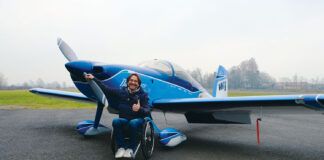
### No Limits!
Marco Cherubini is a paraplegic, but that didn’t stop him from building an RV-7 and fulfilling his dreams of flight.
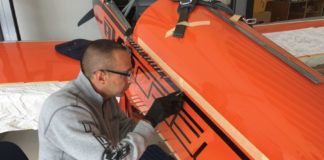
### A Ground Loop Story
Sometimes stuff happens.

### Flying Legend’s Tucano Replica
If you can't own an original, it's the next best thing.

### Up With Smoke
Installing a smoke system to make your mark in the sky.
| Luca “Luke” Perazzolli earned his pilot license in 1989 and has logged more than 1500 hours in 25 different types of aircraft. He currently owns a Van’s RV-8 that he built in 2010. Luca flies aerobatics and is a mountain glacier pilot, with ratings for snow and uphill landings. He is also an LSA instructor, Italian EAA technical counselor, flight advisor, DAR, and experimental aircraft flight test pilot. As president of EAA chapter 1581, he is very focused on Young Eagle activities. Luca also teaches flight testing, metal building, and aircraft electrical systems for the Italian EAA.
This month Barnaby Wainfan turns his attention to the control system and how various aspects such as linkages, the elevator planform and tail aspect ratio, and trailing-edge treatments affect pitch control. | ok |
5 | webtext-fineweb__CC-MAIN-2023-14__0__267975660 | https://www.cybermodeler.com/hobby/kits/has/kit_has_10808.shtml | 2023-03-25T09:10:30 | 2023-03-25T09:10:30 | CC-MAIN-2023-14 | s3://commoncrawl/crawl-data/CC-MAIN-2023-14/segments/1679296945317.85/warc/CC-MAIN-20230325064253-20230325094253-00337.warc.gz | 
# Hasegawa 1/200 KC-767 World Tanker Combo Kit First Look
| Date of Review | November 2014 | Manufacturer | Hasegawa |
|---|---|---|---|
| Subject | KC-767 World Tanker Combo | Scale | 1/200 |
| Kit Number | 10808 | Primary Media | Styrene |
| Pros | Easy build, nice details | Cons | Nothing noted |
| Skill Level | Basic | MSRP (USD) | \$54.99 |
### First Look
At the beginning of the 21st Century, the US Air Force released a long awaited requirement to replace the aging KC-135 tanker. The KC-135 was based on the 367-80 (Dash 80) jet airliner prototype to provide an all-jet air refueling solution to a growing fleet of pure jet fighters and bombers. While Boeing was scaling up the Dash 80 into the first Model 707 airliners, they chose a smaller airframe as the solution for the KC-135 mission. While never officially designated as the Model 717, the KC-135 was similar in size to the Model 720 which was also a scaled-down 707 for the commercial market. The KC-135 entered production in the mid-1950s and the last production tanker came off the line in 1965. Where the KC-135 was a specially-designed tanker solution, this time the Air Force wanted a tanker based upon a commercial airframe and the 767 was selected.
The Air Force awarded a contract to Boeing in 2002 for the tanker but this soon ran afoul of politics and the contract was scuttled, opened for competition which brought the Airbus A330 as an alternative which won that competition. Once again politics scuttled that award and Boeing won the third (and final) attempt. In the meantime, Boeing had already pushed forward on the KC-767 concept and sold the first four tankers to the Italian Air Force. Japan followed with four tankers for the JASDF while the Airbus A330 tanker was adopted by other air arms. Columbia acquired their own tanker from a 767 converted by IAI.
Here is Hasegawa's 1/200 Boeing 767-200 kit set up as the KC-767 and perhaps we'll see this kit again as the KC-46A once the US Air Force takes delivery of its own belated tankers. The kit is molded in light gray styrene and presented on five parts trees. Actually there are ten parts trees as Hasegawa provides two complete tanker kits in this box. The kits offer the following features and options:
- Simple construction
- Cockpit bulkhead serves as mount for heavy screws used for ballast
- Landing gear is posed extended only
- Two types of refueling drogue pods included (Italy or Columbia)
- High speed refueling boom included (Italy and Japan)
Markings are provided for three aircraft:
- KC-767A, 14-01/N767TT, Italian Air Force
- KC-767 MMTT, 1202, Columbian Air Force, 'Jupiter'
- KC-767J, 87-3602, 404 SQ/1 TAG, JASDF
The decal sheet has a nice set of maintenance stencils for the airframe as well as the distinctive markings for each of the subjects above.
Overall, this really is a nice kit which provides some well-thought-out options with the two different types of refueling pods and refueling boom to mix and match as needed to render each of the subjects above. With two tanker kits in this box, you can render two of the three subjects above or build one of them as a KC-46A (using your own decals...). Have some fun and give this release a turn on your bench!
My sincere thanks to Hasegawa USA for this review sample!
| Hasegawa 1/200 KC-767 World Tanker Combo Kit First Look
By Michael Benolkin
|Date of Review||November 2014||Manufacturer||Hasegawa|
|Subject||KC-767 World Tanker Combo||Scale||1/200|
|Kit Number||10808||Primary Media||Styrene|
|Pros||Easy build, nice details||Cons||Nothing noted|
|Skill Level||Basic||MSRP (USD)||$54.99|
At the beginning of the 21st Century, the US Air Force released a long awaited requirement to replace the aging KC-135 tanker. The KC-135 was based on the 367-80 (Dash 80) jet airliner prototype to provide an all-jet air refueling solution to a growing fleet of pure jet fighters and bombers. While Boeing was scaling up the Dash 80 into the first Model 707 airliners, they chose a smaller airframe as the solution for the KC-135 mission. While never officially designated as the Model 717, the KC-135 was similar in size to the Model 720 which was also a scaled-down 707 for the commercial market. The KC-135 entered production in the mid-1950s and the last production tanker came off the line in 1965. Where the KC-135 was a specially-designed tanker solution, this time the Air Force wanted a tanker based upon a commercial airframe and the 767 was selected.
The Air Force awarded a contract to Boeing in 2002 for the tanker but this soon ran afoul of politics and the contract was scuttled, opened for competition which brought the Airbus A330 as an alternative which won that competition. Once again politics scuttled that award and Boeing won the third (and final) attempt. In the meantime, Boeing had already pushed forward on the KC-767 concept and sold the first four tankers to the Italian Air Force. Japan followed with four tankers for the JASDF while the Airbus A330 tanker was adopted by other air arms. Columbia acquired their own tanker from a 767 converted by IAI.
Here is Hasegawa's 1/200 Boeing 767-200 kit set up as the KC-767 and perhaps we'll see this kit again as the KC-46A once the US Air Force takes delivery of its own belated tankers. The kit is molded in light gray styrene and presented on five parts trees. Actually there are ten parts trees as Hasegawa provides two complete tanker kits in this box. The kits offer the following features and options:
- Simple construction
- Cockpit bulkhead serves as mount for heavy screws used for ballast
- Landing gear is posed extended only
- Two types of refueling drogue pods included (Italy or Columbia)
- High speed refueling boom included (Italy and Japan)
Markings are provided for three aircraft:
- KC-767A, 14-01/N767TT, Italian Air Force
- KC-767 MMTT, 1202, Columbian Air Force, 'Jupiter'
- KC-767J, 87-3602, 404 SQ/1 TAG, JASDF
The decal sheet has a nice set of maintenance stencils for the airframe as well as the distinctive markings for each of the subjects above.
Overall, this really is a nice kit which provides some well-thought-out options with the two different types of refueling pods and refueling boom to mix and match as needed to render each of the subjects above. With two tanker kits in this box, you can render two of the three subjects above or build one of them as a KC-46A (using your own decals...). Have some fun and give this release a turn on your bench!
My sincere thanks to Hasegawa USA for this review sample! | ok |
6 | webtext-fineweb__CC-MAIN-2022-27__0__219019136 | https://ir.library.carleton.ca/pub/19876 | 2022-06-24T23:22:56 | 2022-06-24T23:22:56 | CC-MAIN-2022-27 | s3://commoncrawl/crawl-data/CC-MAIN-2022-27/segments/1656103033816.0/warc/CC-MAIN-20220624213908-20220625003908-00588.warc.gz | Al-Jaburi, K. (Khider) and D. Feszty (Daniel)
# Passive flow control of dynamic stall via surface-based trapped vortex generators
Journal of the American Helicopter Society, Volume 63 - Issue 3
A novel passive flow control concept—based on the local modification of an airfoil’s surface—is proposed and examined via computational fluid dynamics (CFD) for the mitigation of the negative effects of dynamic stall, i.e., for the reduction of peak negative pitching moment while not deteriorating significantly the original lift and drag characteristics. Two-dimensional CFD simulations of a NACA 0012 airfoil exposed to a freestream of Mach 0.3 and Re = 3.76 × 10⁶ and undergoing a 15? ± 10? pitch oscillation with a reduced frequency of 0.101 were conducted. The baseline airfoil simulations were carefully verified and validated, showing excellent agreement with wind tunnel data. Twenty-six different local geometry modifications were proposed and examined, all functioning as a trapped-vortex generator. The surface modifications were examined on both the upper and lower surfaces. In the case of the upper surface modifications, the best geometries could reduce the peak negative pitching moment by as much as 37–63%, while sacrificing only 2–10% of peak lift and reducing drag by 14–38%. On the other hand, the lower surface modifications demonstrated the ability to increase lift by 4–16% with only minor penalty in pitching moment and drag.
Al-Jaburi, K. (Khider), & Feszty, D. (2018). Passive flow control of dynamic stall via surface-based trapped vortex generators. In Journal of the American Helicopter Society
(Vol. 63). doi:10.4050/JAHS.63.032005
| Passive flow control of dynamic stall via surface-based trapped vortex generators
Journal of the American Helicopter Society , Volume 63 - Issue 3
A novel passive flow control concept—based on the local modification of an airfoil’s surface—is proposed and examined via computational fluid dynamics (CFD) for the mitigation of the negative effects of dynamic stall, i.e., for the reduction of peak negative pitching moment while not deteriorating significantly the original lift and drag characteristics. Two-dimensional CFD simulations of a NACA 0012 airfoil exposed to a freestream of Mach 0.3 and Re = 3.76 × 10⁶ and undergoing a 15? ± 10? pitch oscillation with a reduced frequency of 0.101 were conducted. The baseline airfoil simulations were carefully verified and validated, showing excellent agreement with wind tunnel data. Twenty-six different local geometry modifications were proposed and examined, all functioning as a trapped-vortex generator. The surface modifications were examined on both the upper and lower surfaces. In the case of the upper surface modifications, the best geometries could reduce the peak negative pitching moment by as much as 37–63%, while sacrificing only 2–10% of peak lift and reducing drag by 14–38%. On the other hand, the lower surface modifications demonstrated the ability to increase lift by 4–16% with only minor penalty in pitching moment and drag.
|Journal of the American Helicopter Society|
|Organisation||Department of Mechanical and Aerospace Engineering|
Al-Jaburi, K. (Khider), & Feszty, D. (2018). Passive flow control of dynamic stall via surface-based trapped vortex generators. In Journal of the American Helicopter Society (Vol. 63). doi:10.4050/JAHS.63.032005 | ok |
7 | webtext-fineweb__CC-MAIN-2018-26__0__74321687 | http://www.pressreader.com/uk/the-jewish-chronicle/20080425/281724085277988 | 2018-06-21T07:28:46 | 2018-06-21T07:28:46 | CC-MAIN-2018-26 | s3://commoncrawl/crawl-data/CC-MAIN-2018-26/segments/1529267864039.24/warc/CC-MAIN-20180621055646-20180621075646-00488.warc.gz | # Israel’s ninth satellite lifts off
ISRAEL YESTERDAY was scheduled to launch Amos 3 — a telecommunications satellite designed and built by Israel Aerospace Industries — from a site in Kazakhstan.
It reinforces Israel’s status as a satellite superpower, which can also monitor Iran and its Arab neighbours without relying on other countries’ goodwill.
The satellite will stay in stationary orbit at an altitude of 36,000km, offering services to commercial clients throughout the world. Spacecom, an American service provider which will operate the satellite, announced this week that it already had orders worth \$160 million (£80m). Amos 3 joins a stable of eight Israeli c o mmunic a - tions and reconnaissance satellites currently orbiting the Earth. Israel is one of only seven countries — or in the case of Europe, groups of countries — that build their own satellites and are capable of launching them.
Professor Isaac Ben-Israel, the chairman of Israel’s space programme, told the JC: “Israel is self-sufficient in space. There are about 50 countries involved in space.
“Most of them buy their satellites from those seven. Israel is one of the seven. The world market for space services is already worth \$150 billion (£75bn) a year. There’s no reason why we shouldn’t have 5 to 10 per cent of that.”
Israel specialises in micro-satellites, weighing 300-400kg. “The lighter the satellite, the cheaper it is,” explained Professor Ben-Israel, a former director of research and development in the Defence Ministry.
“The launch doesn’t cost so much. The sub-systems cost less. So we found ourselves with the capability of building sophisticated satellites that are relatively cheap. The world started to show an interest.”
Earlier this year, Israel launched the TecSAR, a revolutionary surveillance satellite.
Instead of an optical camera, it uses advanced radar technology, which does not need light. It can send back high-definition images taken at night and through cloud.
With French financial support, Israel is now developing the Venus, a scientific satellite which will be put to use monitoring the environment and pollution.
“Satellites are perhaps the best source of monitoring global warming,” explained Professor Ben-Israel. “They can take photographs of fields, for instance, and identify certain diseases in plants.
“You can look at the sea with multispectral cameras, which can detect and identify all the chemicals in the water.
“The scientists will use those measurements in order to build or verify or change the model which can predict all these phenomena.”
| Israel’s ninth satellite lifts off
ISRAEL YESTERDAY was scheduled to launch Amos 3 — a telecommunications satellite designed and built by Israel Aerospace Industries — from a site in Kazakhstan.
It reinforces Israel’s status as a satellite superpower, which can also monitor Iran and its Arab neighbours without relying on other countries’ goodwill.
The satellite will stay in stationary orbit at an altitude of 36,000km, offering services to commercial clients throughout the world. Spacecom, an American service provider which will operate the satellite, announced this week that it already had orders worth $160 million (£80m). Amos 3 joins a stable of eight Israeli c o mmunic a - tions and reconnaissance satellites currently orbiting the Earth. Israel is one of only seven countries — or in the case of Europe, groups of countries — that build their own satellites and are capable of launching them.
Professor Isaac Ben-Israel, the chairman of Israel’s space programme, told the JC: “Israel is self-sufficient in space. There are about 50 countries involved in space.
“Most of them buy their satellites from those seven. Israel is one of the seven. The world market for space services is already worth $150 billion (£75bn) a year. There’s no reason why we shouldn’t have 5 to 10 per cent of that.”
Israel specialises in micro-satellites, weighing 300-400kg. “The lighter the satellite, the cheaper it is,” explained Professor Ben-Israel, a former director of research and development in the Defence Ministry.
“The launch doesn’t cost so much. The sub-systems cost less. So we found ourselves with the capability of building sophisticated satellites that are relatively cheap. The world started to show an interest.”
Earlier this year, Israel launched the TecSAR, a revolutionary surveillance satellite.
Instead of an optical camera, it uses advanced radar technology, which does not need light. It can send back high-definition images taken at night and through cloud.
With French financial support, Israel is now developing the Venus, a scientific satellite which will be put to use monitoring the environment and pollution.
“Satellites are perhaps the best source of monitoring global warming,” explained Professor Ben-Israel. “They can take photographs of fields, for instance, and identify certain diseases in plants.
“You can look at the sea with multispectral cameras, which can detect and identify all the chemicals in the water.
“The scientists will use those measurements in order to build or verify or change the model which can predict all these phenomena.” | ok |
8 | webtext-fineweb__CC-MAIN-2017-17__0__204946617 | https://jonathanesmith.blogspot.com/2011/07/final-shuttle-launch-sts-135.html | 2017-04-30T20:36:01 | 2017-04-30T20:36:01 | CC-MAIN-2017-17 | s3://commoncrawl/crawl-data/CC-MAIN-2017-17/segments/1492917125849.25/warc/CC-MAIN-20170423031205-00594-ip-10-145-167-34.ec2.internal.warc.gz | # Jonathan E. Smith
Thoughts and musings pertaining to life, ministry, and the pursuit of technology.
### The Final Shuttle Launch STS-135
The final details have come together for our STS-135 launch trip. All the spots are filled at the private location where I will be viewing the launch from. I am interested in Causeway tickets but am not willing to pay the greedy prices currently being listed on eBay. This will be a fun trip as I connect with friends from the launches of STS-132, 133 and 134. I'm also looking forward to a tour of the Cape Canaveral Air Force Station - a place I have been once....secretly.
This launch is history in the making as our great nation, which just celebrated its 235<sup>th</sup> birthday, gives up the ability to fly humans into space and instead chooses to rely on our former Space Race competitors in order to reach low earth orbit.
As we watch the last space shuttle escape Earth’s gravity I wonder how history is going to repeat itself. The last manned flight from the Apollo missions was in 1975 and the first space shuttle mission didn’t take place until 1981. Will our gap only be 6 years or will political and economic factors make the gap longer? What role will the private sector play? Will NASA be relegated to a government regulations industry overseeing private space flight or will NASA again lead the world in launching humans into space? What role does national pride play in modern space exploration? And what about the Chinese, could that be the next great Space Race?
Only time will tell but as I watch the final space shuttle mission these and other thoughts will be going through my mind.
| The final details have come together for our STS-135 launch trip. All the spots are filled at the private location where I will be viewing the launch from. I am interested in Causeway tickets but am not willing to pay the greedy prices currently being listed on eBay. This will be a fun trip as I connect with friends from the launches of STS-132, 133 and 134. I'm also looking forward to a tour of the Cape Canaveral Air Force Station - a place I have been once....secretly.
This launch is history in the making as our great nation, which just celebrated its 235th birthday, gives up the ability to fly humans into space and instead chooses to rely on our former Space Race competitors in order to reach low earth orbit.
As we watch the last space shuttle escape Earth’s gravity I wonder how history is going to repeat itself. The last manned flight from the Apollo missions was in 1975 and the first space shuttle mission didn’t take place until 1981. Will our gap only be 6 years or will political and economic factors make the gap longer? What role will the private sector play? Will NASA be relegated to a government regulations industry overseeing private space flight or will NASA again lead the world in launching humans into space? What role does national pride play in modern space exploration? And what about the Chinese, could that be the next great Space Race?
Only time will tell but as I watch the final space shuttle mission these and other thoughts will be going through my mind. | ok |
9 | webtext-fineweb__CC-MAIN-2023-50__0__182047200 | https://tgdaily.com/web/security/us-air-force-launches-high-altitude-uas/ | 2023-12-01T07:39:03 | 2023-12-01T07:39:03 | CC-MAIN-2023-50 | s3://commoncrawl/crawl-data/CC-MAIN-2023-50/segments/1700679100276.12/warc/CC-MAIN-20231201053039-20231201083039-00186.warc.gz | # US Air Force launches high-altitude UAS
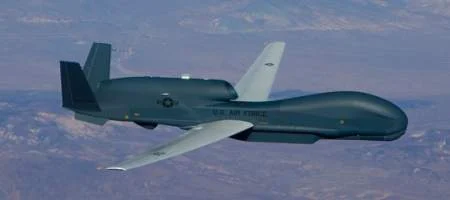
The US Air Force and Northrop Grumman have completed a successful test flight of the Global Hawk AF-18.
The high-altitude, long-endurance (HALE) unmanned aircraft system (UAS) flew for approximately two hours from Palmdale to Edwards Air Force Base in California.
Global Hawk program director Steve Amburgey explained that the next-generation UAS is equipped with an advanced, all-weather multi-platform radar technology insertion program (MP-RTIP) sensor.
“[The sensor] provides game-changing situational awareness for our warfighters with its unprecedented capability to detect, track and identify stationary and moving targets,” said Amburgey.
According to Amburgey, Global Hawk’s range, endurance and large payload capabilities are well suited to provide persistent surveillance of the enemy.
“Flying at altitudes up to 60,000 feet for more than 32 hours per sortie at speeds approaching 340 knots, the MP-RTIP-equipped Block 40 Global Hawk can persistently see through most type of weather, day or night.”
??”As the world’s first fully autonomous HALE UAS, Global Hawk is the platform of choice for a wide variety of sensors, foreign and domestic, meeting the global need for persistent ISR.”
| The US Air Force and Northrop Grumman have completed a successful test flight of the Global Hawk AF-18.
The high-altitude, long-endurance (HALE) unmanned aircraft system (UAS) flew for approximately two hours from Palmdale to Edwards Air Force Base in California.
Global Hawk program director Steve Amburgey explained that the next-generation UAS is equipped with an advanced, all-weather multi-platform radar technology insertion program (MP-RTIP) sensor.
“[The sensor] provides game-changing situational awareness for our warfighters with its unprecedented capability to detect, track and identify stationary and moving targets,” said Amburgey.
According to Amburgey, Global Hawk’s range, endurance and large payload capabilities are well suited to provide persistent surveillance of the enemy.
“Flying at altitudes up to 60,000 feet for more than 32 hours per sortie at speeds approaching 340 knots, the MP-RTIP-equipped Block 40 Global Hawk can persistently see through most type of weather, day or night.”
??”As the world’s first fully autonomous HALE UAS, Global Hawk is the platform of choice for a wide variety of sensors, foreign and domestic, meeting the global need for persistent ISR.” | ok |
10 | webtext-fineweb__CC-MAIN-2023-50__0__101251646 | https://airport-fort-lauderdale.com/flight-hrt92-chartright-air-fll-to-yyz/ | 2023-12-03T01:41:14 | 2023-12-03T01:41:14 | CC-MAIN-2023-50 | s3://commoncrawl/crawl-data/CC-MAIN-2023-50/segments/1700679100476.94/warc/CC-MAIN-20231202235258-20231203025258-00556.warc.gz | Flight HRT92 – Chartright Air HRT92 FLL to YYZ Flight Status
Chartright Air Flight HRT92 connects Fort Lauderdale to Toronto, taking off from Fort Lauderdale – Hollywood International Airport (FLL) and landing at Lester B. Pearson International Airport (YYZ).
## Departure (HRT92 Flight Schedule)
Fort Lauderdale
Fort Lauderdale – Hollywood International Airport
Departure: October 11, 2023
Scheduled:
19:00
Actual:
20:12
## Chartright Air – HRT 92
Landed – On Time
Arrival (HRT92 Flight Schedule)
Toronto
Lester B. Pearson International Airport
Arrival: October 11, 2023
Scheduled:
22:08
### What is the current flight status of HRT 92?
The current flight status of HRT 92 is landed.
### How long is the HRT 92 flight from Fort Lauderdale to Toronto?
The average flight duration from Fort Lauderdale to Toronto is 4 hours and 8 minutes.
| Flight HRT92 – Chartright Air HRT92 FLL to YYZ Flight Status
Chartright Air Flight HRT92 connects Fort Lauderdale to Toronto, taking off from Fort Lauderdale – Hollywood International Airport (FLL) and landing at Lester B. Pearson International Airport (YYZ).
Fort Lauderdale – Hollywood International Airport
Departure: October 11, 2023
Landed – On Time
Arrival (HRT92 Flight Schedule)
Lester B. Pearson International Airport
Arrival: October 11, 2023
The current flight status of HRT 92 is landed.
The average flight duration from Fort Lauderdale to Toronto is 4 hours and 8 minutes. | ok |
11 | webtext-fineweb__CC-MAIN-2023-50__0__59311162 | https://en.alhaya-aviation.com/about-us/ | 2023-11-30T06:43:08 | 2023-11-30T06:43:08 | CC-MAIN-2023-50 | s3://commoncrawl/crawl-data/CC-MAIN-2023-50/segments/1700679100172.28/warc/CC-MAIN-20231130062948-20231130092948-00234.warc.gz | ## About Us
On August 7, 2019, Al Haya Aviation received its Air Operator Certificate from the Iraqi Civil Aviation Authority making Al Haya Aviation the only Iraqi dedicated Air Cargo operator.
Al Haya Aviation currently owns and operates CRJ 200F and narrow-body aircraft for the middle east region with a variable payload capacity, Al Haya Aviation has the capability of providing air cargo charter services both domestically and internationally. Al Haya Aviation will be adding in a near future a wide-body Cargo Aircraft according to Iraqi Markets demand.
Aircraft currently is based at the Sulaymaniyah International Airport and Sharjah International Airport and we can fly to any routes and destinations required for Cargo pickup and delivery as chartered air cargo operations, meeting your air cargo needs and schedules.
Alhaya Aviation has a very expert and skills team for running the Cargo Aviation
Business.
Alhaya Aviation has its own IATA Code for issuing AWBs under number 164 with
IATA Code HA.
Finally, Alhaya participated with SITA.
ALHAYA Can operate to Middle East Area and East European, as well as Africa.
Our main philosophy is to be focused on one field we know best charter flights and
simply delivered a better product in that area. Although we have many requests and
proposals around the world, we believe that the best approach is to focus on one
thing and make it right.

| On August 7, 2019, Al Haya Aviation received its Air Operator Certificate from the Iraqi Civil Aviation Authority making Al Haya Aviation the only Iraqi dedicated Air Cargo operator.
Al Haya Aviation currently owns and operates CRJ 200F and narrow-body aircraft for the middle east region with a variable payload capacity, Al Haya Aviation has the capability of providing air cargo charter services both domestically and internationally. Al Haya Aviation will be adding in a near future a wide-body Cargo Aircraft according to Iraqi Markets demand.
Aircraft currently is based at the Sulaymaniyah International Airport and Sharjah International Airport and we can fly to any routes and destinations required for Cargo pickup and delivery as chartered air cargo operations, meeting your air cargo needs and schedules.
Alhaya Aviation has a very expert and skills team for running the Cargo Aviation
Alhaya Aviation has its own IATA Code for issuing AWBs under number 164 with
IATA Code HA.
Finally, Alhaya participated with SITA.
ALHAYA Can operate to Middle East Area and East European, as well as Africa.
Our main philosophy is to be focused on one field we know best charter flights and
simply delivered a better product in that area. Although we have many requests and
proposals around the world, we believe that the best approach is to focus on one
thing and make it right. | ok |
12 | webtext-fineweb__CC-MAIN-2023-50__0__68753184 | https://mak-iac.org/en/rassledovaniya/an-2-ra-84566-18-09-2016/ | 2023-11-30T21:21:25 | 2023-11-30T21:21:25 | CC-MAIN-2023-50 | s3://commoncrawl/crawl-data/CC-MAIN-2023-50/segments/1700679100232.63/warc/CC-MAIN-20231130193829-20231130223829-00367.warc.gz | # AN-2 RA-84566 18.09.2016
| Accident date | 18.09.2016 |
|---|---|
| Investigation status | |
| Aircraft registration number | RA-84566 |
| Place of aircraft departure | |
| Airport of departure | |
| Intended destination | |
| Intended Airport of arrival | |
| Accident site | in the area of Tatarskoe Uraikino locality of the Ulyanovsk region |
| Latitude | |
| Longitude | |
| Aircraft type | AN-2 |
| Serial № | |
| Aircraft operator | |
| Aircraft owner | "Avia-partner" Ltd |
| The date of the completion of the investigation (report) | 04.09.2017 |
| Number of fatalities | 0 |
| Victims accuracy | |
| Degree of aircraft destruction | aircraft substantially damaged |
| Report | report_ra-84566.pdf (1.51 MB) |
| Aviation type | GA |
| Works type | |
| Note | |
### 19 september 2016
The accident with An-2 Ra-84566 aircraft owned by "Avia-partner" Ltd occurred in the area of Tatarskoe Uraikino locality of the Ulyanovsk region on September 18, 2016. According to the available information the aircraft sustained substantial damage.
The Interstate Aviation Committee has assigned the Investigation team of the accident in accordance with the Russian Aviation Legislation. The Investigation team has started its work.
### 12 september 2017
Investigation team of the Interstate Aviation Committee has completed the investigation of the accident with An-2 RA-84566 aircraft owned by Aviapartner, Ltd occurred in the Ulyanovsk region (RF) on 17.09.2016.
Most probably, the accident with An-2 RA-84566 aircraft was caused by the destruction of the nose gear mount attachment bolted-type connection resulted from one-time off-design load as a result of obstacle in-flight collision occurred during the areal works performance, that resulted in the separation of the mount attachment from the fuselage in course of landing. Thereby the gear design integrity was broken that resulted in the fuselage damage.
Most probably, the contributing factors were:
- violation of An-2 AFM, Chapter 2, Minimum cabin crew, which specifies a two-member crew when performing the areal works:
- violation of FAR-128, item 7.4 according to which the flights during the chemical treatment of flat areas (fields, gardens, vinelands, etc.) should be performed at a hight not lower than 5 m.
In violation of the Air Code of the Russian Federation, article 96, the aircraft owner provided to the Investigation team neither the PIC information, nor the aircraft documentation.
Appropriate safety recommendations based on the investigation results were developed. .
| |Aircraft registration number||RA-84566|
|Place of aircraft departure|
|Airport of departure|
|Intended Airport of arrival|
|Accident site||in the area of Tatarskoe Uraikino locality of the Ulyanovsk region|
|Aircraft owner||"Avia-partner" Ltd|
|The date of the completion of the investigation (report)||04.09.2017|
|Number of fatalities||0|
|Degree of aircraft destruction||aircraft substantially damaged|
report_ra-84566.pdf (1.51 MB)
The accident with An-2 Ra-84566 aircraft owned by "Avia-partner" Ltd occurred in the area of Tatarskoe Uraikino locality of the Ulyanovsk region on September 18, 2016. According to the available information the aircraft sustained substantial damage.
The Interstate Aviation Committee has assigned the Investigation team of the accident in accordance with the Russian Aviation Legislation. The Investigation team has started its work.
Investigation team of the Interstate Aviation Committee has completed the investigation of the accident with An-2 RA-84566 aircraft owned by Aviapartner, Ltd occurred in the Ulyanovsk region (RF) on 17.09.2016.
Most probably, the accident with An-2 RA-84566 aircraft was caused by the destruction of the nose gear mount attachment bolted-type connection resulted from one-time off-design load as a result of obstacle in-flight collision occurred during the areal works performance, that resulted in the separation of the mount attachment from the fuselage in course of landing. Thereby the gear design integrity was broken that resulted in the fuselage damage.
Most probably, the contributing factors were:
In violation of the Air Code of the Russian Federation, article 96, the aircraft owner provided to the Investigation team neither the PIC information, nor the aircraft documentation.
Appropriate safety recommendations based on the investigation results were developed. . | ok |
13 | webtext-fineweb__CC-MAIN-2018-43__0__84112399 | http://netermpaperafvi.isomerhalder.us/hot-air-balloon-ride.html | 2018-10-15T22:01:07 | 2018-10-15T22:01:07 | CC-MAIN-2018-43 | s3://commoncrawl/crawl-data/CC-MAIN-2018-43/segments/1539583509845.17/warc/CC-MAIN-20181015205152-20181015230652-00332.warc.gz | # Hot air balloon ride
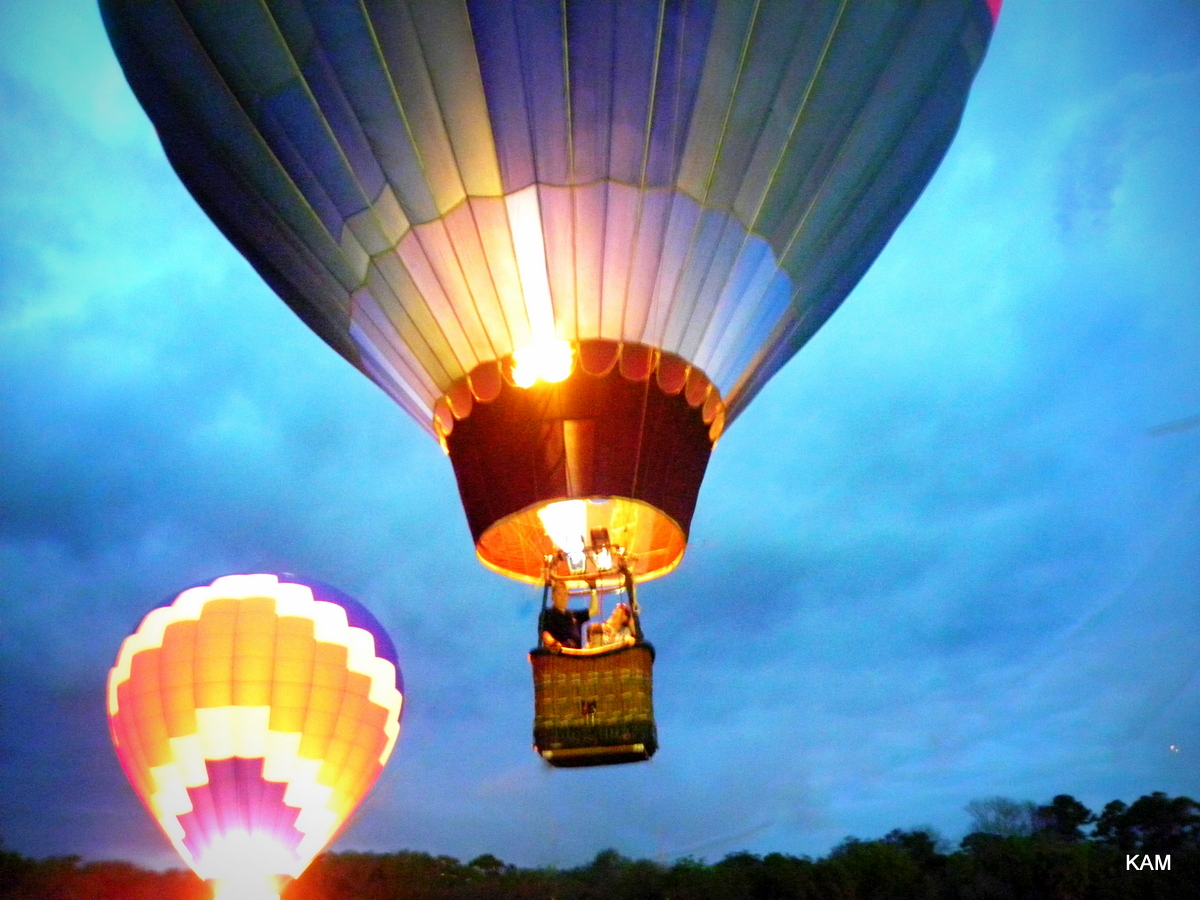
Rides are 6:30-8:30 pm bring your family and friends out for this unique experience as the hot air balloon lifts you up into the sky for a tethered ride a limited. Best of the city albuquerque aaa logo privacy policy | terms of use | contact ©2018 rainbow ryders hot air balloon company, all. Often considered a nature walk in the sky, hot-air ballooning is a premier and exclusive way to ride into the napa valley sunrise it's also one of the most unique. Nothing compares to soaring through the sky in a hot air balloon cloud 9 living offers hot air balloon rides nationwide - and it makes an incredible gift make a. A number of operators do hot-air balloon rides in the coachella valley, primarily in the high season of november through may, with sunrise and sunset being the .

Balloon america is tucson's only balloon tour company accredited and approved by the better business bureau with an a+ rating with 34 years in business. Our basic hot air balloon ride near seattle is, by far your best bet for getting a truly exciting experience if you are on a budget. Hot air balloon rides are the best way to see lancaster county create a memory give the ultimate gift for any occasion. Revel in 360-degree views of earth's most scenic landscapes, hovering high and low on a thrilling hot-air balloon ride only the adventurous.
Experience the beauty of bucks county's landscape while floating effortlessly in a us hot air balloon ride if you're planning a wedding, the breathtaking. Hot air balloons rides over pagosa country add to itinerary experiencing a trip in a hot air balloon provides a unique perspective of pagosa country, allowing. Customized hot air balloon rides, weddings, and promotional advertising 365 days a year in the central florida area near orlando florida and disney world.
Hot air balloon flights in tuscany - we offer different balloon rides: the standard balloon flight with traditional prosecco breakfast after landing this is the. It looks amazing—a bright balloon floating hundreds of feet above the ground but how much does a hot air balloon ride cost, and is it scary. Balloon rides in las vegas: check out 442 reviews and photos of viator's las vegas hot air balloon ride.
## Hot air balloon ride
Orlando is beautiful from the ground but even more beautiful from the sky take a trip with us and make memories to last a lifetime book a ride online now. Celebrate one of the most majestic means of transport with a peaceful hot air balloon flight over the rolling hills and lush vineyards of the temecula valley. Experience the adventure of a lifetime and see vegas like never before from a hot air balloon give the gift of flight and book a trip online today.
Hot air balloon rides in upstate new york offer passengers breathtaking bird eye's views of the region's scenic landscape one ride is sure to. Learn more about air, balloons & helicopter tours in sedona and explore attractions, places to stay see sedona from the sky in a hot air balloon or helicopter. Bring your family out for the tethered hot air balloon rides at this year's 176th waukesha county fair—running july 18-22 rides are 5-8 minutes in length. Our traditional champagne balloon flight is the experience of a lifetime imagine floating high above orange county in our custom made hot air balloon.
Private sunrise balloon ride private sunset balloon ride © 2018 rainbow ryders hot air balloon company, all rights. A hot air balloon ride is an exhilarating experience as you float thousands of feet above the earth's surface, you can see entire landscapes. Hot air balloon tours through grand adventures leave every morning at as you gain altitude, the ride will begin to feel still, peaceful, and extremely tranquil. Fair winds hot air balloon flights, hot air balloon rides 10538 arapahoe rd lafayette, co 80026 (303) 939-9323.

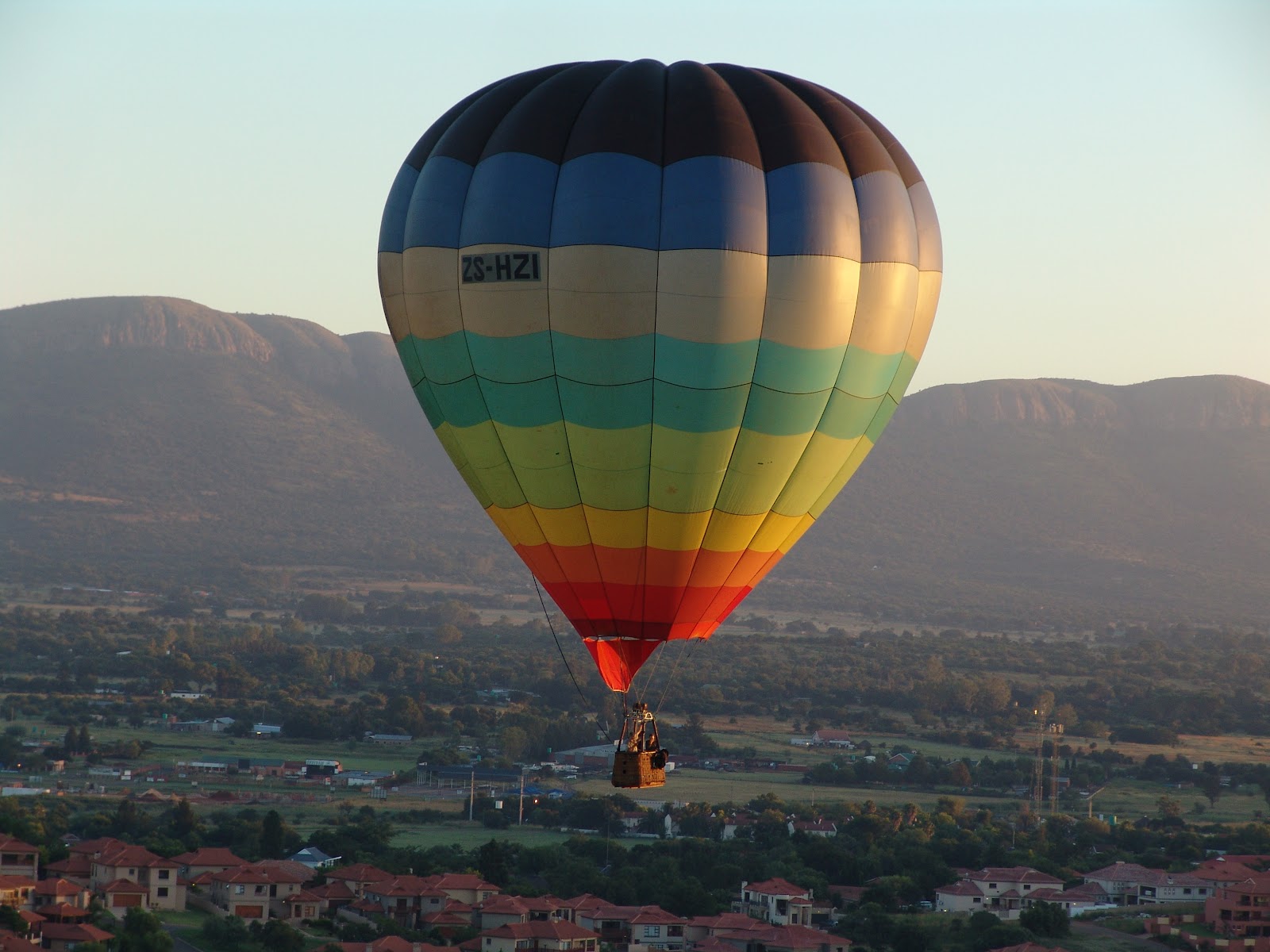


| Balloon america is tucson's only balloon tour company accredited and approved by the better business bureau with an a+ rating with 34 years in business. Our basic hot air balloon ride near seattle is, by far your best bet for getting a truly exciting experience if you are on a budget. Hot air balloon rides are the best way to see lancaster county create a memory give the ultimate gift for any occasion. Revel in 360-degree views of earth's most scenic landscapes, hovering high and low on a thrilling hot-air balloon ride only the adventurous.
Experience the beauty of bucks county's landscape while floating effortlessly in a us hot air balloon ride if you're planning a wedding, the breathtaking. Hot air balloons rides over pagosa country add to itinerary experiencing a trip in a hot air balloon provides a unique perspective of pagosa country, allowing. Customized hot air balloon rides, weddings, and promotional advertising 365 days a year in the central florida area near orlando florida and disney world.
Hot air balloon flights in tuscany - we offer different balloon rides: the standard balloon flight with traditional prosecco breakfast after landing this is the. It looks amazing—a bright balloon floating hundreds of feet above the ground but how much does a hot air balloon ride cost, and is it scary. Balloon rides in las vegas: check out 442 reviews and photos of viator's las vegas hot air balloon ride.
Orlando is beautiful from the ground but even more beautiful from the sky take a trip with us and make memories to last a lifetime book a ride online now. Celebrate one of the most majestic means of transport with a peaceful hot air balloon flight over the rolling hills and lush vineyards of the temecula valley. Experience the adventure of a lifetime and see vegas like never before from a hot air balloon give the gift of flight and book a trip online today.
Hot air balloon rides in upstate new york offer passengers breathtaking bird eye's views of the region's scenic landscape one ride is sure to. Learn more about air, balloons & helicopter tours in sedona and explore attractions, places to stay see sedona from the sky in a hot air balloon or helicopter. Bring your family out for the tethered hot air balloon rides at this year's 176th waukesha county fair—running july 18-22 rides are 5-8 minutes in length. Our traditional champagne balloon flight is the experience of a lifetime imagine floating high above orange county in our custom made hot air balloon.
Private sunrise balloon ride private sunset balloon ride © 2018 rainbow ryders hot air balloon company, all rights. A hot air balloon ride is an exhilarating experience as you float thousands of feet above the earth's surface, you can see entire landscapes. Hot air balloon tours through grand adventures leave every morning at as you gain altitude, the ride will begin to feel still, peaceful, and extremely tranquil. Fair winds hot air balloon flights, hot air balloon rides 10538 arapahoe rd lafayette, co 80026 (303) 939-9323. | ok |
14 | webtext-fineweb__CC-MAIN-2015-11__0__69029271 | http://www.sbir.gov/sbirsearch/detail/133110 | 2015-03-02T01:22:32 | 2015-03-02T01:22:32 | CC-MAIN-2015-11 | s3://commoncrawl/crawl-data/CC-MAIN-2015-11/segments/1424936462577.56/warc/CC-MAIN-20150226074102-00320-ip-10-28-5-156.ec2.internal.warc.gz | # Innovative Lightweight Onboard Aerodynamic Palliatives for Helicopter Brownout…
Award Information
| Agency: Department of Defense | Branch: Air Force | Award ID: 86958 | Program Year/Program: 2008 / SBIR |
|---|---|---|---|
| Agency Tracking Number: F081-078-0535 | Solicitation Year: N/A | Solicitation Topic Code: N/A | Solicitation Number: N/A |
Small Business Information
Continuum Dynamics, Inc.
34 Lexington Avenue Ewing, NJ 08618-2302
Woman-Owned: No
Minority-Owned: No
HUBZone-Owned: No
Phase 1
Fiscal Year: 2008
Title: Innovative Lightweight Onboard Aerodynamic Palliatives for Helicopter Brownout Dust Abatement
Agency / Branch: DOD / USAF
Contract: FA8650-08-M-1387
Award Amount: \$99,997.00
Abstract:
Rotorcraft brownout, which is caused by the entrainment of dust and ground debris by the rotorwash during take-off and landing, is a critical operational problem, and has caused a significant number of military helicopter accidents in Iraq and Afghanistan. Brownout affects safe operations due to the reduction of visibility, in addition to damaging engine components and rotor blades. Recent experience gained from operations in brownout with a variety of rotorcraft configurations, as well as ongoing work with validated analyses, indicates that aerodynamic modifications to the aircraft may offer a true solution to the brownout problem, at least in terms of pilot visibility. Therefore, the effort proposed herein seeks to develop innovative lightweight onboard aerodynamic solutions to brownout that can be retrofitted to current rotorcraft and incorporated into future designs without degrading performance or requiring additional onboard equipment or consumables. This effort will leverage work for the US Army developing physics-based analysis tools for the engineering simulation of rotorcraft brownout conditions and expertise in rotorcraft aerodynamic design, testing and performance analysis, to demonstrate that lightweight active aerodynamic solutions to brownout are not only viable, but also practical and cost effective without posing a risk to performance, operations or personnel.
Principal Investigator:
Glen R. Whitehouse
Associate
6095380444
glen@continuum-dynamics.com
Business Contact:
Barbara A. Agans
Director, Business Administration
6095380444
barbara@continuum-dynamics.com Small Business Information at Submission:
CONTINUUM DYNAMICS, INC.
34 Lexington Avenue Ewing, NJ 08618
EIN/Tax ID: 222248930
DUNS: N/A
Number of Employees:
Woman-Owned: No
Minority-Owned: No
HUBZone-Owned: No
| Innovative Lightweight Onboard Aerodynamic Palliatives for Helicopter Brownout Dust Abatement
Agency / Branch:
DOD / USAF
Rotorcraft brownout, which is caused by the entrainment of dust and ground debris by the rotorwash during take-off and landing, is a critical operational problem, and has caused a significant number of military helicopter accidents in Iraq and Afghanistan. Brownout affects safe operations due to the reduction of visibility, in addition to damaging engine components and rotor blades. Recent experience gained from operations in brownout with a variety of rotorcraft configurations, as well as ongoing work with validated analyses, indicates that aerodynamic modifications to the aircraft may offer a true solution to the brownout problem, at least in terms of pilot visibility. Therefore, the effort proposed herein seeks to develop innovative lightweight onboard aerodynamic solutions to brownout that can be retrofitted to current rotorcraft and incorporated into future designs without degrading performance or requiring additional onboard equipment or consumables. This effort will leverage work for the US Army developing physics-based analysis tools for the engineering simulation of rotorcraft brownout conditions and expertise in rotorcraft aerodynamic design, testing and performance analysis, to demonstrate that lightweight active aerodynamic solutions to brownout are not only viable, but also practical and cost effective without posing a risk to performance, operations or personnel.
Small Business Information at Submission:
CONTINUUM DYNAMICS, INC.
34 Lexington Avenue Ewing, NJ 08618
Number of Employees: | ok |
15 | webtext-fineweb__CC-MAIN-2022-49__0__151859399 | https://talker.news/2022/11/22/check-out-nasas-artemis-spacecrafts-stunning-selfies/ | 2022-12-07T03:36:25 | 2022-12-07T03:36:25 | CC-MAIN-2022-49 | s3://commoncrawl/crawl-data/CC-MAIN-2022-49/segments/1669446711126.30/warc/CC-MAIN-20221207021130-20221207051130-00542.warc.gz | ### Outer Space
# Check out NASA’s Artemis spacecraft’s stunning selfies
Jaw-dropping portraits saw the lunar surface in close proximity.

The Moon is seen as flight control team used the cameras on the Orion's solar wings to do a thorough inspection of the spacecraft. (NASA Orion via SWNS)
By Dean Murray via SWNS
As NASA's Artemis spacecraft arrived at the Moon Monday, November 21, the spacecraft snapped some amazing selfies.
Jaw-dropping portraits saw the lunar surface in close proximity as the flight control team used cameras on Orion's solar wings to do a thorough inspection of the spacecraft.
Orion’s entry into the lunar sphere of influence made the Moon, instead of Earth, the main gravitational force acting on the spacecraft.
The Moon is seen as flight control team used the cameras on the Orion's solar wings to do a thorough inspection of the spacecraft. (NASA Orion via SWNS)
The maneuver saw flight controllers conducting an outbound powered flyby burn to harness the force from the Moon’s gravity, accelerate the spacecraft, and direct it toward a distant retrograde orbit beyond the Moon.
Orion re-acquired signal with NASA’s Deep Space Network at 12:59 GMT after successfully performing the outbound powered flyby burn with a firing of the orbital maneuvering system engine for 2 minutes and 30 seconds to accelerate the spacecraft at a rate of more than 580 mph.
At the time of the burn, Orion was 328 miles above the Moon, traveling at 5,023 mph.
Shortly after the burn, Orion passed 81 miles above the Moon, traveling at 5,102 mph.
At the time of the lunar flyby, Orion was more than 230,000 miles from Earth.
The outbound powered flyby burn is the first of two maneuvers required to enter the distant retrograde orbit around the Moon.
The spacecraft will perform the distant retrograde orbit insertion burn Friday, November 25, using the European Service Module.
Orion will remain in this orbit for about a week to test systems. The distant retrograde will take Orion 40,000 miles past the Moon before it returns to Earth.
| By Dean Murray via SWNS
As NASA's Artemis spacecraft arrived at the Moon Monday, November 21, the spacecraft snapped some amazing selfies.
Jaw-dropping portraits saw the lunar surface in close proximity as the flight control team used cameras on Orion's solar wings to do a thorough inspection of the spacecraft.
Orion’s entry into the lunar sphere of influence made the Moon, instead of Earth, the main gravitational force acting on the spacecraft.
The maneuver saw flight controllers conducting an outbound powered flyby burn to harness the force from the Moon’s gravity, accelerate the spacecraft, and direct it toward a distant retrograde orbit beyond the Moon.
Orion re-acquired signal with NASA’s Deep Space Network at 12:59 GMT after successfully performing the outbound powered flyby burn with a firing of the orbital maneuvering system engine for 2 minutes and 30 seconds to accelerate the spacecraft at a rate of more than 580 mph.
At the time of the burn, Orion was 328 miles above the Moon, traveling at 5,023 mph.
Shortly after the burn, Orion passed 81 miles above the Moon, traveling at 5,102 mph.
At the time of the lunar flyby, Orion was more than 230,000 miles from Earth.
The outbound powered flyby burn is the first of two maneuvers required to enter the distant retrograde orbit around the Moon.
The spacecraft will perform the distant retrograde orbit insertion burn Friday, November 25, using the European Service Module.
Orion will remain in this orbit for about a week to test systems. The distant retrograde will take Orion 40,000 miles past the Moon before it returns to Earth.
Stories and infographics by ‘Talker Research’ are available to download & ready to use. Stories and videos by ‘Talker News’ are managed by SWNS. To license content for editorial or commercial use and to see the full scope of SWNS content, please email firstname.lastname@example.org or submit an inquiry via our contact form.
Couple sets world record for traveling around the globe on a tandem bike
The couple completed their world tour in 180 days, 12 hours and 25 minutes - setting a new Guinness World...
World’s first solar-electric car in production
Featuring 5sqm of curved solar arrays, the Lightyear 0 charges wherever there is daylight, whether parked up or on the...
Stunned onlookers watch as fleet of robots line up at crosswalk
"I even heard one of them ask a lady passing to press the button for them."
Woman creates new device to help women recovering from a mastectomy
"With other prosthetics, like legs, the primary concern isn't that it looks like a real leg, it's that it's functional...
Noisy neighbors scientifically proven to be more annoying than other sounds
The team believe their research is pressing as populations are becoming increasingly dense and working from home is more and...
- Quizzes4 days ago
Take a swipe at our online dating quiz
- Holidays5 days ago
Stunning photos show 100,000 colorful poinsettias ready for Christmas
- Outer Space6 days ago
NASA grants 3D printing company $57.2 million to build towns on lunar surface
- Holidays4 days ago
Should the holiday season last longer?
- Dating & Relationships4 days ago
What do people lie about on their online dating profiles?
- News5 days ago
Manor once owned by ‘Sherlock Holmes’ author Sir Arthur Conan Doyle on sale
- Home6 days ago
What are the keys to a good relationship with your landlord?
- Cars6 days ago
Aston Martin designed home lets owners park cars near dining table | ok |
16 | webtext-fineweb__CC-MAIN-2016-22__0__6014412 | http://aero-news.net/getmorefromann.cfm?do=main.textpost&id=dd97ed7d-f200-4f06-84c1-bd6c7d29c97c | 2016-05-26T20:25:34 | 2016-05-26T20:25:34 | CC-MAIN-2016-22 | s3://commoncrawl/crawl-data/CC-MAIN-2016-22/segments/1464049276304.88/warc/CC-MAIN-20160524002116-00027-ip-10-185-217-139.ec2.internal.warc.gz | Tue, May 15, 2012
# Expedition 31 Trio Launches To International Space Station
## Two Russians, One American To Join ISS Crew
NASA Flight Engineer Joseph Acaba, Russian Soyuz Commander Gennady Padalka and Flight Engineer Sergei Revin lifted off for the International Space Station at 2301 EDT Monday, May 14 (0901 Baikonur time on May 15), from the Baikonur Cosmodrome in Kazakhstan.

Acaba, Padalka and Revin are scheduled to dock their Soyuz TMA-04M spacecraft to the Poisk module of the station at 2339 EDT Wednesday, May 16. They will join Expedition 31 Commander Oleg Kononenko of the Russian Federal Space Agency and Flight Engineers Don Pettit of NASA and André Kuipers of the European Space Agency, who have been aboard the orbiting laboratory since Dec. 23, 2011. The six astronauts and cosmonauts will work together for about two months.
Upon arrival, Acaba, Padalka and Revin will become members of the Expedition 31 crew, restoring the station's crew complement to six and continuing scientific research aboard the station. Pettit, Kononeko and Kuipers are scheduled to return to Earth on July 1. Acaba, Padalka and Revin will return home in mid-September.
Also on board with the crew was a small "Smokey Bear" plush toy serving as the traditional Soyuz "talisman." Smokey Bear is the U.S. national symbol for wildfire prevention. Prior to the flight, Acaba explained he proposed flying Smokey Bear in an effort to raise awareness of human-caused wildfires. Acaba, an avid outdoorsman, holds two degrees in geology and served as an environmental education awareness promoter while in the U.S. Peace Corps.(Photo: Expedition 31 Launch courtesy NASA TV)
###### FMI: www.nasa.gov/station
| Tue, May 15, 2012
Two Russians, One American To Join ISS Crew
NASA Flight Engineer Joseph Acaba, Russian Soyuz Commander Gennady Padalka and Flight Engineer Sergei Revin lifted off for the International Space Station at 2301 EDT Monday, May 14 (0901 Baikonur time on May 15), from the Baikonur Cosmodrome in Kazakhstan.
Acaba, Padalka and Revin are scheduled to dock their Soyuz TMA-04M spacecraft to the Poisk module of the station at 2339 EDT Wednesday, May 16. They will join Expedition 31 Commander Oleg Kononenko of the Russian Federal Space Agency and Flight Engineers Don Pettit of NASA and André Kuipers of the European Space Agency, who have been aboard the orbiting laboratory since Dec. 23, 2011. The six astronauts and cosmonauts will work together for about two months.
Upon arrival, Acaba, Padalka and Revin will become members of the Expedition 31 crew, restoring the station's crew complement to six and continuing scientific research aboard the station. Pettit, Kononeko and Kuipers are scheduled to return to Earth on July 1. Acaba, Padalka and Revin will return home in mid-September.
Also on board with the crew was a small "Smokey Bear" plush toy serving as the traditional Soyuz "talisman." Smokey Bear is the U.S. national symbol for wildfire prevention. Prior to the flight, Acaba explained he proposed flying Smokey Bear in an effort to raise awareness of human-caused wildfires. Acaba, an avid outdoorsman, holds two degrees in geology and served as an environmental education awareness promoter while in the U.S. Peace Corps. (Photo: Expedition 31 Launch courtesy NASA TV)
Also: USAF Hassled, Hummel UltraCruiser, Helo Limits, FAA Video, Greg Connell Accident, Medical Helo Suit, Bombardier's 100th VistaJet Canada is proposing changes to their seaplane>[...]
Finally Talking (And Still Hyping), Icon Production Plans Take A Big Hit The following is the text of a release from Icon Aircraft (bluster and all)... ANN Analysis and industry re>[...]
Atlantic Crossing Next Major Hurdle Solar Impulse 2 (Si2) departed Dayton (OH) International Airport with Bertrand Piccard at the controls, this morning at 0402 local time (UTC-4).>[...]
The Company That Won't Answer Questions, May Finally Have To Do So ANN has been bombarded with info and reports concerning the health and well-being of the Icon Aircraft program...>[...]
Safety Management System (SMS) This FAA website was created as a public resource for those seeking to learn more about SMS within the aviation industry and the FAA.>[...] | ok |
17 | webtext-fineweb__CC-MAIN-2024-10__0__118821120 | https://www.hullegalaxytabs.com/find-the-best-reviews-on-drones-with-camera-only-on-droneswithcamera-info.htm | 2024-03-01T05:01:37 | 2024-03-01T05:01:37 | CC-MAIN-2024-10 | s3://commoncrawl/crawl-data/CC-MAIN-2024-10/segments/1707947474948.91/warc/CC-MAIN-20240301030138-20240301060138-00002.warc.gz | # Find the best reviews on drones with camera only on droneswithcamera.info

Advancement in technology has made us believe that if we can imagine, we can transform it into reality. As a matter of fact, even things that we cannot imagine in our wildest dreams also exist thanks to the researchers and inventors. Nobody ever thought that unmanned aerial vehicles would ever exist. But drones are a reality now, and its popularity has been increasing like wildfire. There are so many applications and uses of drones that over the next few years, the aerial routes can become as busy as any airport. Drones with cameras have become so affordable that anybody can buy it. But you should go through Best Reviews On Drones With Cameras before deciding which one to buy according to your budget.
Types Of Drones
There are various categorizations of drones based on different parameters. Depending on the number of propellers used, there can be four types, tricopter, quadcopter, hexacopter, and octocopter. Tricopter uses three propellers, and the overall size is very small, and it is best for close range drones. With the increase in the number of propellers, the size increases and applications vary.

Based on equipment, drones are also of four types – drones with cameras, drones with FPV(first person view), drones with GPS and drones with stabilizers. Drones with cameras are the most used and most popular among common men who would like to take the drone as high as they can and get an awesome top and aerial view like in airplane but sitting at the comfort of their home. Drones with cameras are very popular in children who use it as a toy. Such toy drones are less powerful but very much affordable. Photographers and video shooters use powerful drones to get views from an angle that a human being can never take. There are various ranges of drones available, and hence, you need to check out the Best Reviews On Drones With Cameras listed according to prices on droneswithcamera.info.
Applications Of Drones With Cameras
There are so many useful applications of drones that they have become indispensable for human beings. Apart from using them as toys or get amazing aerial views, drones are used for –
- Disaster Aid – Drones can reach out to places of disaster, and it used to provide aid and relief to the needed people. Fire, flood or fallout, physical presence becomes dangerous and unreachable. Drones can be used to pass on the messages and provide food to save lives. As a matter of fact, package delivery by drones is also used by e-commerce sites for urgent delivery.
- Exploration and Research – Drones can reach those places where the human view can never reach and hence, drones with cameras have become essential for research purpose. They are small and fit in any space, and the researchers get to see everything as if he is physically present there. Wildlife exploration is best with drones.
- Survey – Drones are used to survey crops and weather very often. Farmers can sit at a particular place and check out if the plants are suffering from disease or malnutrition and if the irrigation system is working perfectly. Furthermore, construction companies use them to show clients live videos of the spaces they are about to book.
- Fighting Crime – Drones with equipment are used for guarding the border at night using infrared technology. They are useful to spot the criminals hiding and shoot them directly with the drones.
| Advancement in technology has made us believe that if we can imagine, we can transform it into reality. As a matter of fact, even things that we cannot imagine in our wildest dreams also exist thanks to the researchers and inventors. Nobody ever thought that unmanned aerial vehicles would ever exist. But drones are a reality now, and its popularity has been increasing like wildfire. There are so many applications and uses of drones that over the next few years, the aerial routes can become as busy as any airport. Drones with cameras have become so affordable that anybody can buy it. But you should go through Best Reviews On Drones With Cameras before deciding which one to buy according to your budget.
Types Of Drones
There are various categorizations of drones based on different parameters. Depending on the number of propellers used, there can be four types, tricopter, quadcopter, hexacopter, and octocopter. Tricopter uses three propellers, and the overall size is very small, and it is best for close range drones. With the increase in the number of propellers, the size increases and applications vary.
Based on equipment, drones are also of four types – drones with cameras, drones with FPV(first person view), drones with GPS and drones with stabilizers. Drones with cameras are the most used and most popular among common men who would like to take the drone as high as they can and get an awesome top and aerial view like in airplane but sitting at the comfort of their home. Drones with cameras are very popular in children who use it as a toy. Such toy drones are less powerful but very much affordable. Photographers and video shooters use powerful drones to get views from an angle that a human being can never take. There are various ranges of drones available, and hence, you need to check out the Best Reviews On Drones With Cameras listed according to prices on droneswithcamera.info.
Applications Of Drones With Cameras
There are so many useful applications of drones that they have become indispensable for human beings. Apart from using them as toys or get amazing aerial views, drones are used for –
- Disaster Aid – Drones can reach out to places of disaster, and it used to provide aid and relief to the needed people. Fire, flood or fallout, physical presence becomes dangerous and unreachable. Drones can be used to pass on the messages and provide food to save lives. As a matter of fact, package delivery by drones is also used by e-commerce sites for urgent delivery.
- Exploration and Research – Drones can reach those places where the human view can never reach and hence, drones with cameras have become essential for research purpose. They are small and fit in any space, and the researchers get to see everything as if he is physically present there. Wildlife exploration is best with drones.
- Survey – Drones are used to survey crops and weather very often. Farmers can sit at a particular place and check out if the plants are suffering from disease or malnutrition and if the irrigation system is working perfectly. Furthermore, construction companies use them to show clients live videos of the spaces they are about to book.
- Fighting Crime – Drones with equipment are used for guarding the border at night using infrared technology. They are useful to spot the criminals hiding and shoot them directly with the drones. | ok |
18 | webtext-fineweb__CC-MAIN-2023-14__0__16603690 | https://www.cheapflights.com/flights-to-winston-salem/michigan/ | 2023-03-24T03:11:41 | 2023-03-24T03:11:41 | CC-MAIN-2023-14 | s3://commoncrawl/crawl-data/CC-MAIN-2023-14/segments/1679296945242.64/warc/CC-MAIN-20230324020038-20230324050038-00386.warc.gz | # Cheap flights from Michigan to Winston-Salem (INT)
DTW — INT
Mar 27 — Apr 3
| Cheap flights from Michigan to Winston-Salem (INT)
DTW — INT
Mar 27 — Apr 31
1 adult, Economy
We work with more than 300 partners to bring you better travel deals
When flying from Michigan to Winston-Salem, the time of day you decide to fly out makes little to no difference towards the overall price you’ll pay on tickets.
Related info for your journey
Useful info, stats and facts about Michigan to Winston-Salem flights.
If you book a flight to Winston-Salem from Michigan, you will be flying to Smith-Reynolds, which is the city’s only airport. Winston-Salem Smith-Reynolds (INT) is located 2.7 mi from the center of Winston-Salem.
These are just IATA (International Air Transport Association) codes. They are used in aviation to identify and differentiate airports. That’s why a Detroit Metropolitan Wayne County Airport to Winston-Salem Smith-Reynolds Airport flight would often be abbreviated as a DTW to INT flight. Grand Rapids Gerald R. Ford Intl Airport (GRR), Flint Bishop Airport (FNT), Traverse City Cherry Capital Airport (TVC), Lansing Capital City Airport (LAN), Kalamazoo Intl Airport (AZO) are other airports near this flight route and their unique identifiers/IATA codes. | ok |
19 | webtext-fineweb__CC-MAIN-2023-23__0__167143147 | https://www.thejapannews.net/newsr/9587 | 2023-05-31T04:26:41 | 2023-05-31T04:26:41 | CC-MAIN-2023-23 | s3://commoncrawl/crawl-data/CC-MAIN-2023-23/segments/1685224646257.46/warc/CC-MAIN-20230531022541-20230531052541-00316.warc.gz | 
## Gecsotor™ System: New Opportunities for Aircraft
The Japan News
17 Jun 2019, 10 GMT+10
The ground-breaking invention of European engineers has everything it takes not only to become a game changer in the aircraft industry and space exploration but also to bring the science of aerial navigation to a whole new level. We've already calculated the success of the implementation of the Gecsotor™ system in light and cargo vehicles, water transport and submarines. The estimated figures are truly impressive. Moreover, the introduction of this smart system in cargo and passenger aircraft offers benefits at least equal to those for the ground and water transport.
Among the stars
The operation principle of Gecsotor™ is based on controlling the position of an object in space by means of storage and subsequent use of the kinetic energy generated by coupled flywheels or power systems in combination with the gyroscopic action. Meanwhile, the system itself acts as a lever, which makes it possible to perform the required actions: rotation, position locking, and torque compensation regardless of environmental conditions and the coordinate system used. This opens up really incredible horizons for spaceships that were previously unattainable. Among them, it is worth highlighting the following aspects:
- Better launch vehicle control during the penetration of dense atmosphere layers;
- Spacecraft acceleration in circumsolar orbit at an angle to the solar wind (this applies to spaceships with solar sail propulsion);
- Position locking and rotation of heavy objects in any direction at the defined time; for instance, during coupling;
- Ability to fine-tune the travel direction when approaching other spacecraft;
- Giving space debris the desired direction of movement in order to burn it in the atmosphere;
- The landing of reusable launch-vehicles without the use of rocket fuel.
Aerial navigation
Gecsotor™ offers enormous potential for the safety of cargo and passenger aircraft. The ground-breaking system makes it possible to safely and reliably control various flying machines, including stealth aircraft. With this system, the coupled motor-generator could work without power feed during an emergency.
The system can be effectively used in all kinds of flying machines, even in aircraft with vertical takeoff, including convertiplanes and helicopters. The system is also a game changer in the field of UAVs, where artificial intelligence meets modular approach to aircraft construction. Among many other apparent advantages, it is worth to mention the following aspects:
- Improvement of flight quality by means of aerodynamic performance optimization of the aircraft;
- The possibility to land and takeoff from shorter airstrips;
- Increased stability and torque compensation during nose-ups, tilting, and other emergency conditions.
- Ability to change the path of motion of the vehicle without the use of the steering wheel, ailerons, or engines with adjustable thrust vector;
- The system makes it impossible to turn-over in any weather conditions;
- Full motion control during hypersonic flight and other conditions that involve altered aerodynamics.
These and many other safety features will drastically reduce the number of accidents and lead to a paradigm shift in the aircraft industry. This would lead to some serious cost saving, so there is no wonder why Gecsotor™ attracts the interest of many foreign investors. There is no doubt that the introduction of the system will soon become the subject of national importance. The application of the invention in the aerospace field would save thousands of lives, as well as bring substantial income to companies and national budgets of many leading countries of the world.
| The ground-breaking invention of European engineers has everything it takes not only to become a game changer in the aircraft industry and space exploration but also to bring the science of aerial navigation to a whole new level. We've already calculated the success of the implementation of the Gecsotor™ system in light and cargo vehicles, water transport and submarines. The estimated figures are truly impressive. Moreover, the introduction of this smart system in cargo and passenger aircraft offers benefits at least equal to those for the ground and water transport.
Among the stars
The operation principle of Gecsotor™ is based on controlling the position of an object in space by means of storage and subsequent use of the kinetic energy generated by coupled flywheels or power systems in combination with the gyroscopic action. Meanwhile, the system itself acts as a lever, which makes it possible to perform the required actions: rotation, position locking, and torque compensation regardless of environmental conditions and the coordinate system used. This opens up really incredible horizons for spaceships that were previously unattainable. Among them, it is worth highlighting the following aspects:
- Better launch vehicle control during the penetration of dense atmosphere layers;
- Spacecraft acceleration in circumsolar orbit at an angle to the solar wind (this applies to spaceships with solar sail propulsion);
- Position locking and rotation of heavy objects in any direction at the defined time; for instance, during coupling;
- Ability to fine-tune the travel direction when approaching other spacecraft;
- Giving space debris the desired direction of movement in order to burn it in the atmosphere;
- The landing of reusable launch-vehicles without the use of rocket fuel.
Gecsotor™ offers enormous potential for the safety of cargo and passenger aircraft. The ground-breaking system makes it possible to safely and reliably control various flying machines, including stealth aircraft. With this system, the coupled motor-generator could work without power feed during an emergency.
The system can be effectively used in all kinds of flying machines, even in aircraft with vertical takeoff, including convertiplanes and helicopters. The system is also a game changer in the field of UAVs, where artificial intelligence meets modular approach to aircraft construction. Among many other apparent advantages, it is worth to mention the following aspects:
- Improvement of flight quality by means of aerodynamic performance optimization of the aircraft;
- The possibility to land and takeoff from shorter airstrips;
- Increased stability and torque compensation during nose-ups, tilting, and other emergency conditions.
- Ability to change the path of motion of the vehicle without the use of the steering wheel, ailerons, or engines with adjustable thrust vector;
- The system makes it impossible to turn-over in any weather conditions;
- Full motion control during hypersonic flight and other conditions that involve altered aerodynamics.
These and many other safety features will drastically reduce the number of accidents and lead to a paradigm shift in the aircraft industry. This would lead to some serious cost saving, so there is no wonder why Gecsotor™ attracts the interest of many foreign investors. There is no doubt that the introduction of the system will soon become the subject of national importance. The application of the invention in the aerospace field would save thousands of lives, as well as bring substantial income to companies and national budgets of many leading countries of the world.Click here for further information | ok |
20 | webtext-fineweb__CC-MAIN-2018-26__0__135160522 | http://www.orlandosentinel.com/topic/religion-belief/christianity/evangelical-christianity/jim-bakker-PERLL000310-topic.html | 2018-06-20T09:50:08 | 2018-06-20T09:50:08 | CC-MAIN-2018-26 | s3://commoncrawl/crawl-data/CC-MAIN-2018-26/segments/1529267863516.21/warc/CC-MAIN-20180620085406-20180620105406-00097.warc.gz | # Jim Bakker
### Televangelist plane for Jesus adds to long list of religious shenanigans
And so a televangelist claims he needs a \$54-million private jet to help spread the gospel.
Praise Jesus!
And talk about chutzpah.
Evangelist Jesse Duplantis of Louisiana has a dream: Owning a Dassault Falcon 7X, a luxury plane that’s reportedly worth at least \$54 million. So he is asking listeners to “pray about becoming a partner” by soliciting donations.
“I really believe that if Jesus was physically on the Earth today, he wouldn’t be riding a donkey,” Duplantis said in a May 21 video posted on his website. “Think about it for a minute. He’d be in an airplane preaching the gospel all over the world.”
Methinks by comparing a donkey to a jet airplane,...
| And so a televangelist claims he needs a $54-million private jet to help spread the gospel.
And talk about chutzpah.
Evangelist Jesse Duplantis of Louisiana has a dream: Owning a Dassault Falcon 7X, a luxury plane that’s reportedly worth at least $54 million. So he is asking listeners to “pray about becoming a partner” by soliciting donations.
“I really believe that if Jesus was physically on the Earth today, he wouldn’t be riding a donkey,” Duplantis said in a May 21 video posted on his website. “Think about it for a minute. He’d be in an airplane preaching the gospel all over the world.”
Methinks by comparing a donkey to a jet airplane,... | ok |
21 | webtext-fineweb__CC-MAIN-2021-10__0__182334929 | https://dspace.mit.edu/handle/1721.1/84161 | 2021-03-04T11:13:05 | 2021-03-04T11:13:05 | CC-MAIN-2021-10 | s3://commoncrawl/crawl-data/CC-MAIN-2021-10/segments/1614178368687.25/warc/CC-MAIN-20210304082345-20210304112345-00101.warc.gz | ## Cost Metrics for Unmanned Aerial Vehicles
##### Author(s)
Valerdi, Ricardo

##### Terms of use
Attribution-NonCommercial-ShareAlike 3.0 United States
http://creativecommons.org/licenses/by-nc-sa/3.0/us/
##### Metadata
##### Abstract
This paper aims to enhance the understanding of UAV cost metrics and their uses. The paper is organized into three main areas: (1) overview of current approaches for aircraft, (2) life cycle issues with UAV cost estimation, and (3) cost metrics and model approach as applied to UAVs. As a result of this work we hope to provide a better understanding of the cost factors influencing the recently publicized scrutiny of UAV cost overruns. More importantly, we hope to begin the foundation for the development of Cost Estimating Relationships (CERs) that can potentially lead to the development of a parametric cost model for UAVs.
##### Date issued
2005-09-26
##### URI
http://hdl.handle.net/1721.1/84161
##### Keywords
unmanned aerial vehicles (UAVs), cost metrics, cost estimating relationships (CERs)
| Cost Metrics for Unmanned Aerial Vehicles
MetadataShow full item record
This paper aims to enhance the understanding of UAV cost metrics and their uses. The paper is organized into three main areas: (1) overview of current approaches for aircraft, (2) life cycle issues with UAV cost estimation, and (3) cost metrics and model approach as applied to UAVs. As a result of this work we hope to provide a better understanding of the cost factors influencing the recently publicized scrutiny of UAV cost overruns. More importantly, we hope to begin the foundation for the development of Cost Estimating Relationships (CERs) that can potentially lead to the development of a parametric cost model for UAVs.
unmanned aerial vehicles (UAVs), cost metrics, cost estimating relationships (CERs)
The following license files are associated with this item: | ok |
22 | webtext-fineweb__CC-MAIN-2018-17__0__70125418 | http://easternhops.com/community/ | 2018-04-20T19:52:45 | 2018-04-20T19:52:45 | CC-MAIN-2018-17 | s3://commoncrawl/crawl-data/CC-MAIN-2018-17/segments/1524125944682.35/warc/CC-MAIN-20180420194306-20180420214306-00325.warc.gz | # Join EasternHops Community Today
The mission of our Community is to educate, learn, and contribute while having fun in the process.
EasternHops offers a variety of flying events and theme days on our dedicated custom servers.
Our Community provides a comfortable flying environment where virtual pilots can learn and understand basic and advanced flight and navigation using the knowledge, skills, and experience of our virtual pilots and actual licensed pilots. We offer this all in an atmosphere free of intimidation.
## EasternHops Community Events
Here are some of the events happening now at EasternHops...
#### KingAir 350 Wednesdays
Join us as we fly across the globe in a KingAir 350 Every Wednesday
#### Thunder Thursday
With heavy winds, blustering rain and awesome thunder and lightning show.
#### Foggy Friday
Bring your A-Game for this nail biting, edge of your seat madness that will bring your IFR skills out.
#### ATC Saturday
Our new ATC Saturdays will bring you an all new challange around busy airport hubs. Why not try it ?
#### Cessna Sunday
It's prop time, join us as each week we visit around the world in our default Cessna 172.
#### Meet & Greet
FlightSimCon is an annual flight simulation and aviation conference for pilots and aviation enthusiasts.
## Interesting Statistics
# 349
### Active Pilots
# 75815:02:00
### Total Hours Flown
# 32098
### Total Flights Flown
# 33025125
### Total Miles Flown
## Live Twitch Feed
Live Twitch Feed and chat...
## Members Screenshots
## Current Flights
| Pilot | Flight | Departure | Arrival | Status |
|---|---|---|---|---|
| EAS4222 | EAS121388 | LFBC | ENTC | Cruising |
| EAS21 | EAS3770 | KJFK | KSFO | Climbing |
| EAS102 | EAS121386 | SPIM | KMCO | Arrived |
| EAS5411 | EAS121370 | USSS | UNOO | Landing |
| EAS5202 | EAS117886 | KSLC | KOGD | Approaching |
| EAS27 | EAS121369 | CYVR | KDFW | Cruising |
| EAS5277 | EAS107860 | KJFK | KSFO | Cruising |
| EAS5320 | EAS101616 | CYYZ | KJFK | Arrived |
| Join us as we fly across the globe in a KingAir 350 Every Wednesday
With heavy winds, blustering rain and awesome thunder and lightning show.
Bring your A-Game for this nail biting, edge of your seat madness that will bring your IFR skills out.
Our new ATC Saturdays will bring you an all new challange around busy airport hubs. Why not try it ?
It's prop time, join us as each week we visit around the world in our default Cessna 172.
FlightSimCon is an annual flight simulation and aviation conference for pilots and aviation enthusiasts. | ok |
23 | webtext-fineweb__CC-MAIN-2019-47__0__204032706 | https://www.wired.com/2008/07/new-air-force-b/ | 2019-11-14T21:16:20 | 2019-11-14T21:16:20 | CC-MAIN-2019-47 | s3://commoncrawl/crawl-data/CC-MAIN-2019-47/segments/1573496668539.45/warc/CC-MAIN-20191114205415-20191114233415-00386.warc.gz | # New Air Force Big: We're No Good at Buying Gear
# New Air Force Big: We're No Good at Buying Gear

The Air Force is just putting its \$100 billion tanker contract up for bid. It's basically admitting that it doesn't really have the chops to oversee big, complicated equipment buys any more. That's the surprising word from the incoming Air Force Secretary, Michael Donley, during today's press conference at the Pentagon. "Our contracting personnel, our warfighters and our engineers [are] not always adequately prepared to withstand the detailed audits and the legal challenges that we can now expect" during these big contracts," he says. The newest phase of the so-called "KC-X" tanker competition is going to be overseen by Defense Undersecretary John Young, the Pentagon's chief weapons buyer – and not the Air Force, which would be the normal thing to do. Donley says that's "an appropriate and necessary step to ensure congressional and public confidence that DOD can and will successfully manage to completion a large, complex procurement such as
KC-X." The he goes on to tell the gathered reporters:
"This is no small matter, and it's not just an Air Force issue. In an environment of fewer contractors and fewer but larger contracts, we can expect protests like these. It is essential for the department, working with Congress, to maintain both internal and public confidence in our acquisition process. Air Force and DOD officials are ready to brief appropriate congressional committees on additional details of the KC-X
competition, which still includes protected source selection-sensitive information, and we will protect the integrity of this process going forward...
The Air Force needs to rapidly apply the lessons learned from this experience and move forward. Other Air Force acquisition decisions are on the horizon. __GAO's [Government Accountability Office] conclusions show that even in a large, complex procurement with considerable staff resources and oversight, work accomplished by our contracting personnel, our warfighters and our engineers is not always adequately prepared to withstand the detailed audits and the legal challenges that we can now expect. I've asked Sue Payton, the Air Force's assistant secretary for
Acquisition, and her team to ensure that GAO's findings are fully understood and accounted for in preparation for other pending program decisions. __
In sum, restoring confidence in our acquisition process, addressing the
GAO's concerns in the source selection directly to get the best value for the warfighter and the taxpayer and rebuilding the Air Force's internal capabilities and credibility going forward look like the right priorities to me. (emphasis mine)
The next, rather logical question: If the goal is "restoring confidence in the Air Force acquisitions, why is Sue Payton staying on with her job?" Gates took the mic, and tap-danced around a answer.
See also:
| The Air Force is just putting its $100 billion tanker contract up for bid. It's basically admitting that it doesn't really have the chops to oversee big, complicated equipment buys any more. That's the surprising word from the incoming Air Force Secretary, Michael Donley, during today's press conference at the Pentagon. "Our contracting personnel, our warfighters and our engineers [are] not always adequately prepared to withstand the detailed audits and the legal challenges that we can now expect" during these big contracts," he says. The newest phase of the so-called "KC-X" tanker competition is going to be overseen by Defense Undersecretary John Young, the Pentagon's chief weapons buyer – and not the Air Force, which would be the normal thing to do. Donley says that's "an appropriate and necessary step to ensure congressional and public confidence that DOD can and will successfully manage to completion a large, complex procurement such as
KC-X." The he goes on to tell the gathered reporters:
"This is no small matter, and it's not just an Air Force issue. In an environment of fewer contractors and fewer but larger contracts, we can expect protests like these. It is essential for the department, working with Congress, to maintain both internal and public confidence in our acquisition process. Air Force and DOD officials are ready to brief appropriate congressional committees on additional details of the KC-X
competition, which still includes protected source selection-sensitive information, and we will protect the integrity of this process going forward...
The Air Force needs to rapidly apply the lessons learned from this experience and move forward. Other Air Force acquisition decisions are on the horizon. __GAO's [Government Accountability Office] conclusions show that even in a large, complex procurement with considerable staff resources and oversight, work accomplished by our contracting personnel, our warfighters and our engineers is not always adequately prepared to withstand the detailed audits and the legal challenges that we can now expect. I've asked Sue Payton, the Air Force's assistant secretary for
Acquisition, and her team to ensure that GAO's findings are fully understood and accounted for in preparation for other pending program decisions. __
In sum, restoring confidence in our acquisition process, addressing the
GAO's concerns in the source selection directly to get the best value for the warfighter and the taxpayer and rebuilding the Air Force's internal capabilities and credibility going forward look like the right priorities to me. (emphasis mine)
The next, rather logical question: If the goal is "restoring confidence in the Air Force acquisitions, why is Sue Payton staying on with her job?" Gates took the mic, and tap-danced around a answer. | ok |
24 | webtext-fineweb__CC-MAIN-2021-31__0__26213895 | https://www.beautravelmagazine.com/news-you-can-use-130 | 2021-07-25T23:03:41 | 2021-07-25T23:03:41 | CC-MAIN-2021-31 | s3://commoncrawl/crawl-data/CC-MAIN-2021-31/segments/1627046151866.98/warc/CC-MAIN-20210725205752-20210725235752-00323.warc.gz | ## Eureka! The National Children’s Museum in Halifax, West Yorkshire is reaching for the stars this February half term as they celebrate the European Space Agency’s first British Astronaut Tim Peake’s mission in space with a whole fortnight of rocket science for their event Blast Off! Running from Saturday 6th to Sunday 21st February 2016.
## Bring your budding space explorers to Yorkshire’s unique children’s museum to join in with inter-galactic activities. Eureka! Is the only place in Yorkshire where you’ll get to take part in Destination Space sessions, designed by experts in space travel (for children aged 5 – 11), to learn about Tim Peake’s life in space plus the science and people that got him there. Discover the role that you’d have in the space crew, and learn all about the effects that life in space has on the human body.
Blast Off! At Eureka! This February Half Term

Visitors can have a go at rocket science, plus the Eureka! Crew have got their very own replica Sokol space suit – just like the one Tim wore on launch day. Seriously, it’ll be out of this world.
All activities are free with standard admission or with your Eureka! Annual Pass.
| Eureka! The National Children’s Museum in Halifax, West Yorkshire is reaching for the stars this February half term as they celebrate the European Space Agency’s first British Astronaut Tim Peake’s mission in space with a whole fortnight of rocket science for their event Blast Off! Running from Saturday 6th to Sunday 21st February 2016.
Bring your budding space explorers to Yorkshire’s unique children’s museum to join in with inter-galactic activities. Eureka! Is the only place in Yorkshire where you’ll get to take part in Destination Space sessions, designed by experts in space travel (for children aged 5 – 11), to learn about Tim Peake’s life in space plus the science and people that got him there. Discover the role that you’d have in the space crew, and learn all about the effects that life in space has on the human body.
Blast Off! At Eureka! This February Half Term
Visitors can have a go at rocket science, plus the Eureka! Crew have got their very own replica Sokol space suit – just like the one Tim wore on launch day. Seriously, it’ll be out of this world.
All activities are free with standard admission or with your Eureka! Annual Pass. | ok |
No dataset card yet
- Downloads last month
- 22